



You use a stainless steel butterfly valve to control flow in pipes. This valve has a round disc that turns to open or close the way. You can trust a stainless steel butterfly valve for good shut-off and flow control. The material you pick is important because stainless steel fights rust and lasts longer. If you pick bad materials, the valve may wear out fast or leak. TANGGONG VALVE makes stainless steel butterfly valves with strict rules for quality. You get strong performance and long life even in hard places.
-
The material you choose changes how long the valve lasts and how well it fights rust.
-
Stainless steel butterfly valves work well with high heat and pressure.
-
Strong materials help you spend less on repairs and make the valve work better.
Key Takeaways
-
Stainless steel butterfly valves use a simple disc to control flow. The disc opens and closes fast. Picking the right stainless steel grade, like 304 or 316, helps the valve last longer. It also helps stop rust. Check the seals often to stop leaks. This keeps the valve safe and working well. TANGGONG VALVE products are made with high quality. They work well even in hard conditions. Pick the right valve size and actuator type for your system. This helps control flow and makes the system work better.
Stainless Steel Butterfly Valve Overview
What is a Butterfly Valve
A butterfly valve helps control liquids or gases in pipes. It has a round disc that spins on a shaft. Turning the disc opens or closes the valve. This design makes it easy to start, stop, or change the flow fast. Butterfly valves are used in many places like water plants, chemical factories, and food processing. Stainless steel butterfly valves are special because they do not rust easily and last longer than other kinds.
You can pick from different stainless steel grades. The table below shows how 304 and 316 grades are different:
|
Feature |
304 Grade |
316 Grade |
|---|---|---|
|
Corrosion resistance |
Good for mild chemicals |
Excellent for chlorides, acids, harsh chemicals |
|
Typical use cases |
Food lines, breweries, general-purpose systems |
Marine service, pharmaceutical lines, chemical plants |
|
Cost |
More affordable |
More expensive |
|
Contains molybdenum |
No |
Yes |
|
Lifespan in aggressive fluids |
Moderate |
High |
You choose the grade that fits your job. If you use strong chemicals, pick 316 grade. For most jobs, 304 grade is good enough.
Key Features of TANGGONG VALVE Butterfly Valves
TANGGONG VALVE butterfly valves give you many good things. They use strong materials, seal well, and are simple to use. You can pick wafer, lug, flanged, or triple offset types. These valves work with high heat and pressure. You can use your hand or add electric, pneumatic, or hydraulic actuators.
Tip: Butterfly valves save space and money because they are small and light.
TANGGONG VALVE has important certificates for quality and safety. The table below lists these certificates:
|
Certification |
Description |
|---|---|
|
ISO9001:2015 |
Quality management systems |
|
CE |
European conformity |
|
TUV |
Technical inspection and certification |
|
SGS |
Quality assurance and certification |
|
API 6D |
Pipeline valves |
|
API 607 |
Fire test for valves |
You can trust TANGGONG VALVE. They follow strict rules. Their valves work well in hard places and last a long time.
Butterfly Valve Parts and Materials
Main Parts of a Butterfly Valve
Butterfly valves have many parts that help them work. Each part does something important. The body connects the valve to pipes. The disc moves to control the flow. The stem links the disc to the handle or actuator. The seat seals the valve when the disc closes. Seals stop leaks and keep the valve tight. The actuator interface lets you use manual or automatic controls.
Here is a table that shows the main parts and what they do:
|
Component |
Function |
|---|---|
|
Body |
Sits between pipe flanges and connects to pipes |
|
Disc |
Turns to open or close the valve and control flow |
|
Stem |
Links the disc to the handle or actuator |
|
Seat |
Seals the valve to stop flow when closed |
|
Seals |
Keep the valve tight and stop leaks |
|
Actuator Interface |
Lets you use manual, electric, pneumatic, or hydraulic controls |
Tip: Good seals keep your system safe and stop leaks. Check the seals often to make sure they work.
The disc is very important for controlling flow. The seat and seals help the butterfly valve seal well. TANGGONG VALVE uses strong materials for all parts to make sure the valve seals well.
Why Stainless Steel is Used
Stainless steel is used for butterfly valves because it resists rust and seals well. Stainless steel is strong and tough. It lasts longer than other materials. There are two main types: 304 grade and 316 grade.
-
304 grade works well for food lines and general systems. It seals well and resists rust.
-
316 grade has high rust resistance and seals better. It works with harsh chemicals, seawater, and tough places.
TANGGONG VALVE uses both 304 grade and 316 grade for butterfly valve parts. You get strong sealing and long life. 316 grade is best for places with lots of rust and tough conditions.
Here is a table comparing how well materials resist rust:
|
Material |
Corrosion Resistance |
|---|---|
|
Cast Iron |
Limited, for clean water and non-corrosive media |
|
Ductile Iron |
Good, for city water and wastewater |
|
Stainless Steel |
Excellent, for seawater, chemicals, and tough places |
Note: Stainless steel makes a layer that protects the valve from rust and damage. You get strong sealing and long life.
You can trust TANGGONG VALVE to use the best materials for sealing. Their butterfly valves work well and last a long time.
How Does a Butterfly Valve Work
Working Principle Explained
A butterfly valve helps control liquids or gases in pipes. Inside the valve, there is a round disc. You turn the disc to change how much fluid goes through. This quarter-turn makes the valve easy to use and good for flow control.
The way it works is simple. You move the disc to different spots:
-
If the disc is parallel to the pipe, the valve is fully open. Fluid moves easily with almost no blockage.
-
If the disc is partly open, you can control how much fluid passes. This lets you change the flow rate.
-
If the disc is perpendicular to the pipe, the valve is fully closed. The disc stops the flow and seals the pipe.
You can change the disc angle for exact flow control. The quarter-turn design lets you open or close the valve fast. You do not need much strength. You can also use the valve to throttle, which means you control the flow between open and closed.
Tip: Butterfly valves are good for quick shut-off or fine flow control. The disc’s position helps you manage the system.
Actuation Methods
You can use a butterfly valve in different ways. The way you pick depends on your needs and where you use the valve. TANGGONG VALVE gives you many actuation choices for different jobs.
Here is a table that shows manual and automated actuation methods:
|
Feature |
Manual Butterfly Valves |
Automated Butterfly Valves |
|---|---|---|
|
Operation |
Hand-operated (lever or gear) |
Actuator-operated (electric, pneumatic, hydraulic) |
|
Ease of Use |
Simple, needs physical effort |
Remote and automatic, very precise |
|
Cost |
Lower first and upkeep cost |
Higher first and upkeep cost |
|
Applications |
Not used often, remote places |
Used often, exact control, risky or hard systems |
|
Maintenance |
Simple, not much needed |
More complex, actuator care needed |
|
Control Precision |
Depends on the person |
High, can be programmed |
|
Safety |
Person is near the valve |
Remote use lowers risk |
You can use a lever or gear to turn the disc by hand. This is good for small valves or places where you do not change the flow much. Manual use is easy and costs less.
If you want more control or need to use the valve from far away, you can use an actuator. Electric actuators let you open or close the valve with a button. Pneumatic actuators use air to move the disc. Hydraulic actuators use fluid for fast and strong movement.
Here is a table showing how fast each actuation method works:
|
Actuation Method |
Typical Response Time (seconds) |
|---|---|
|
Pneumatic |
0.2 – 0.5 |
|
Electric |
0.5 – 2 |
|
Hydraulic |
0.3 – 0.8 |
Pneumatic and hydraulic actuators work quickly. Electric actuators give you exact control and are easy to connect to automatic systems.
Note: TANGGONG VALVE has manual, electric, pneumatic, and hydraulic actuation options. You can pick the one that fits your system and needs.
Butterfly valves are used in many places. They give you good flow control, fast action, and strong sealing. The way they work and the actuation methods make butterfly valves a smart choice for many industries.
Advantages and Applications
Benefits of TANGGONG VALVE Butterfly Valves
Butterfly valves from TANGGONG VALVE give you many benefits. These valves last a long time. They work well in hard places. You can trust them because they follow strict rules. TANGGONG VALVE checks each valve online and tracks them in real time. This makes sure every valve is safe and reliable. You see no defects and strong results.
Here is a table that shows how certifications help:
|
Certification |
Importance |
|---|---|
|
ISO |
Makes sure the valve meets world quality rules |
|
CE |
Shows the valve is safe for Europe |
|
EAC |
Proves the valve is safe for Eurasia |
|
TUV |
Checks the valve with tough tests for safety |
You also help the planet. Stainless steel butterfly valves cut down leaks and emissions. They use less energy and last longer. You do not need to change them often. You can recycle them when they are old.
Tip: Good valves save money and help your system work well.
Common Uses in Industry
Butterfly valves are used in many jobs. They work well where you need strong flow control and tough materials. Here are some common uses:
-
Food and Beverage Industry: Used for clean processes.
-
Water Supply and Distribution: Used in pipes to control flow.
-
Chemical processing: Needed for handling strong fluids.
-
HVAC systems: Used for heating and cooling.
-
Wastewater treatment: Handles rough and dirty water.
These valves resist acid and tough chemicals. They work with many pressures and temperatures. You see wafer, lug, and triple offset types in each industry.
Selection Tips
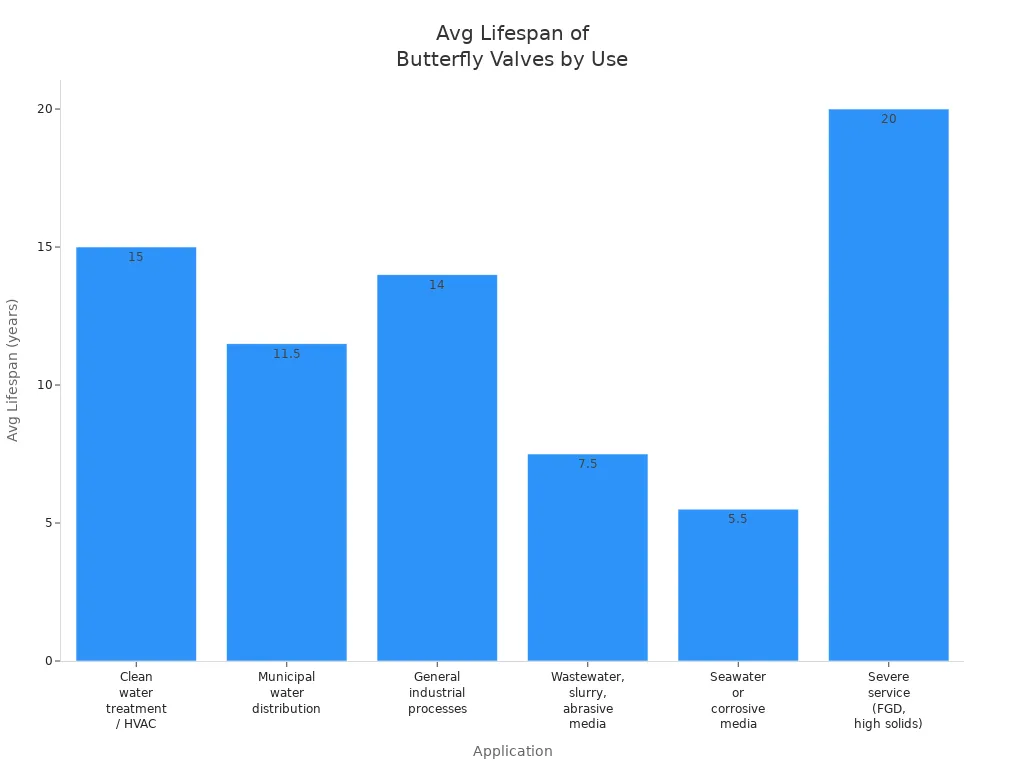
You need to pick the right butterfly valve for your job. Look at the size and pressure rating. Make sure the valve fits your pipe. If the valve is too small, you get friction and lose pressure. Bigger valves handle more pressure.
Check the table below for key points:
|
Factor |
Evidence |
|---|---|
|
Corrosion Resistance |
30% of people pick valves for rust resistance. |
|
Sizing Impact |
Bad sizing can lower valve performance by 15%. |
|
Maintenance Preference |
40% of engineers like easy maintenance when picking valves. |
Think about actuator compatibility too. If you pick the wrong actuator, the valve may not work right. Choose the best stainless steel grade, like 316, for strength and leak prevention. There are many butterfly valve types, so match the type to your job.
Note: More people want stainless steel valves now. You help your system by picking the right valve.
You get strong results, long life, and easy care. You also help the planet and save energy. When you know the good and bad sides of butterfly valves, you make better choices for your work.
You learned that stainless steel butterfly valves help control flow well. The parts are simple and the valve is easy to use. These valves last a long time and do not need much care. TANGGONG VALVE makes products you can trust. Their valves meet high standards. Here are the main points:
|
Feature |
Benefit |
|---|---|
|
High durability |
Less damage, longer life |
|
Certifications |
You can trust the quality and safety |
|
Easy upkeep |
Quick care, no special tools needed |
Pick certified valves for safe and reliable systems. You also save money.
FAQ
What is the difference between wafer and lug butterfly valves?
Wafer butterfly valves sit between two pipe flanges. Lug butterfly valves have threaded inserts for bolts. Lug types let you take off pipes downstream but keep the valve in place.
|
Type |
Installation |
Removal Possible |
|---|---|---|
|
Wafer |
Between pipe flanges |
No |
|
Lug |
With bolts |
Yes |
Can you use a butterfly valve for throttling?
Butterfly valves can be used for throttling. Concentric designs give some control over flow. Double offset valves help you control flow better. Triple offset valves are best for turning flow on or off.
Tip: Choose the right valve type for your flow control needs.
What materials do butterfly valve seats come in?
Seats are made from PTFE, RTFE, EPDM, NBR/Buna-N, Viton/FKM, and metal-to-metal. Each seat material works with different temperatures and chemicals.
-
PTFE: Works well with chemicals
-
EPDM: Works well with water
-
Metal: Works well with high heat
How do you choose the right butterfly valve size?
Check your pipe size and pressure rating first. Make sure the valve fits your system. If you pick the wrong size, you lose flow or pressure.
Note: Always measure your pipes before you order a valve.