



You should know how wafer butterfly valves and lug-style butterfly valves are different. This is important when you work with industrial systems. Picking the correct valve changes how your system works. It also affects how often you fix things and how much money you spend. TANGGONG VALVE gives strong butterfly valves for tough places.
-
If you choose the wrong valve, your system may break more often. You might need to replace seats more times. This means you pay more for repairs and your system stops working without warning.
-
The right valve helps you spend less on workers. It also keeps your system working well.
Key Takeaways
-
Pick the correct valve to lower repair costs and make the system work better.
-
Wafer butterfly valves are small and light. They fit well in places with little space.
-
Lug butterfly valves are easier to fix. You can take apart one side without stopping the whole system.
-
Think about how much pressure the valves can handle. Also, look at what you need for your job before choosing wafer or lug butterfly valves.
-
Ask TANGGONG VALVE for help. They can give advice so you get the best valve for what you need.
Structural Differences: Wafer Butterfly Valve vs. Lug-Style Butterfly Valve
Wafer Butterfly Valve Design Features
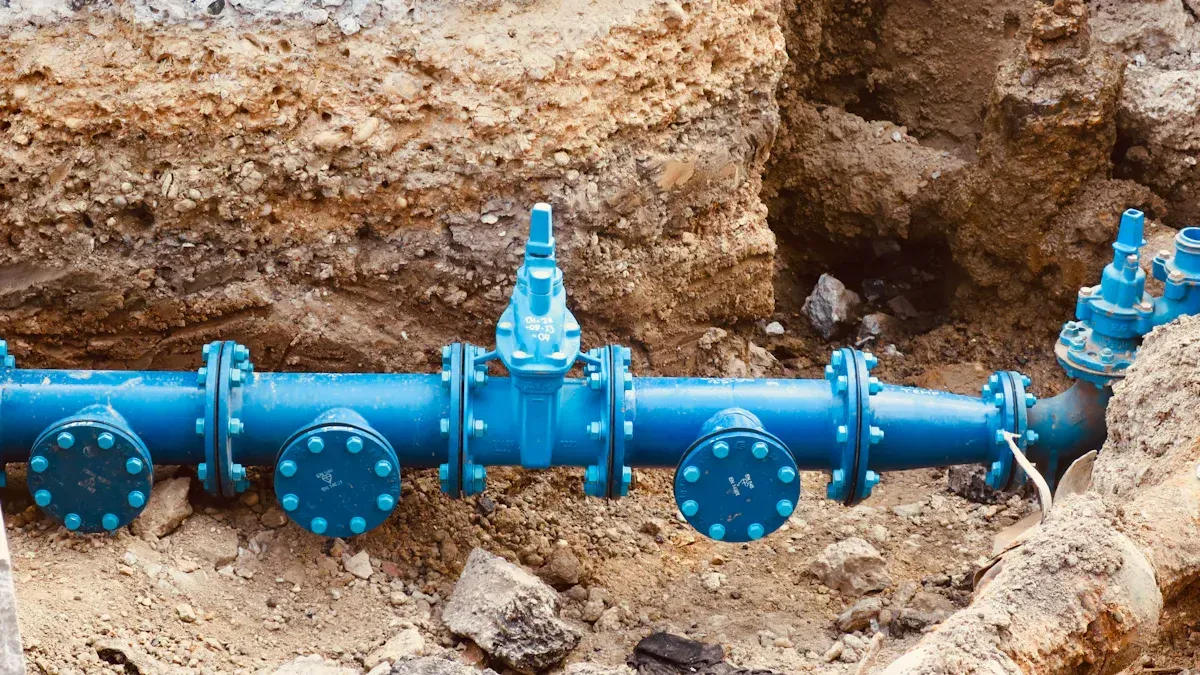
Wafer butterfly valves are used in many factories. The valve sits between two pipe flanges. Bolts hold it in place through the flanges and valve body. This design saves space and is easy to install. The small size means you need less room and support. You can use wafer butterfly valve in tight spots where other valves cannot fit.
The disc inside turns with a quick quarter-turn. This lets you control flow fast. The double eccentric design lowers friction and seals tightly. You get less force needed to operate and less seat wear. TANGGONG VALVE uses strong seat materials like PTFE and metal-to-metal. These materials help stop leaks and shut off reliably.
Tip: Wafer butterfly valve is lighter than other types. You can install it without big lifting tools.
Here is a table showing how design features help performance:
|
Design Feature |
Contribution to Performance |
|---|---|
|
Double eccentric design |
Lowers friction and seals better, so you need less force and get tight shut-off. |
|
Compact and lightweight construction |
Less weight means easier installation and less support needed. |
|
Advanced seat materials |
Better sealing, good for jobs where leaks must be very small. |
|
Efficient disc design |
Needs less force to turn, so it is easier to use. |
|
Quick quarter-turn action |
Makes the system respond faster and work better. |
You can use wafer butterfly valve in water systems, HVAC, and chemical plants. The small size uses up to 40% less space than flanged valves. The light build means you spend less money to install it.
Lug Butterfly Valve Design Features
Lug butterfly valves look different. They have metal inserts called lugs around the valve body. These lugs let you bolt the valve right to each pipe flange. You do not need to clamp it between flanges. You can remove pipes on one side while the valve stays put. This makes fixing and maintaining easier.
The body of a lug butterfly valve is stronger. It supports each flange by itself. There are bolt holes for every flange. This gives you more choices in pipe layouts. TANGGONG VALVE uses ductile iron and stainless steel for lug butterfly valves. These materials fight rust and last longer in tough places.
-
Lug butterfly valves are good for water treatment, process control, and paper making.
-
You can use them at the end of a line to block one side.
-
The valve fits standard flange bolt patterns like ASME B16.5 and EN 1092-1.
-
You can disconnect one side of the pipe without stopping the other side.
Note: Lug butterfly valves are best for systems that need lots of repairs or changes.
Here is a table comparing materials and strength:
|
Valve Type |
Materials Used |
Durability and Corrosion Resistance |
|---|---|---|
|
Wafer Butterfly Valve |
PVC, stainless steel, cast iron |
Not as strong, good for lighter jobs |
|
Lug-Style Butterfly Valve |
Ductile iron, stainless steel |
Stronger, better for tough places |
Connection Methods and Flange Compatibility
You connect wafer butterfly valve by putting it between two flanges. You use bolts to hold everything together. This way is fast and cheap. You cannot remove one side of the pipe without taking out the valve. Wafer butterfly valve does not work for dead-end service. You must shut down the system to fix things.
Lug butterfly valves use threaded inserts for flange bolts. You bolt each flange to the valve body. You can remove pipes on one side while the valve stays in place. This lets you block pressure on one side. You get more choices in system design. Lug butterfly valves allow single-side isolation and dead-end service.
-
Wafer butterfly valve installs quickly and fits many flange types.
-
Lug butterfly valve supports separate bolting and easier repairs.
-
Lug butterfly valve lets you disconnect one side of the pipe without stopping the other side.
Tip: Pick lug butterfly valve if you need to block sections for repairs. Pick wafer butterfly valve if you want a light, space-saving choice.
Both valve types have special benefits. TANGGONG VALVE offers good options for each kind. You can pick the best valve for your system based on space, strength, and repair needs.
Installation and Maintenance: Wafer-Style vs. Lug Butterfly Valve
Wafer-Style Butterfly Valve Installation Steps
It is easy to put in a wafer-style butterfly valve if you follow steps. First, look at the valve and pipe to see if there is dirt. Make sure you know which way the water or gas will go. Always use safety gear before you start. Next, make sure the flanges are straight and the right size. This helps you put the valve in the right spot. Put bolts through the flanges and the valve body. Tighten the bolts in a criss-cross way. Use the right amount of force so you do not break anything. When you finish, open and close the valve a few times. Check for leaks when you turn on the system. Do not make the flanges crooked or use too much force. These mistakes can break the valve.
Lug Butterfly Valve Installation Steps
Lug butterfly valves give you more ways to install them. You can bolt each flange right to the valve body. This design lets you use just one flange if you need to, like with a blind flange. The lugs on the valve take the force, so you do not need the pipe flanges to be as strong. It takes a little longer to put in than a wafer-style valve. But you get more support and choices for your pipes.
Here is a table that shows the main differences in installation:
|
Installation Parameter |
Wafer Style Butterfly Valve |
Lug Style Butterfly Valve |
|---|---|---|
|
Installation Time |
20–30 minutes (DN100) |
30–45 minutes (DN100) |
|
Required Pipeline Flange |
Both flanges required |
Can use single flange |
|
Clamping Force Requirement |
Relies on flange strength |
Lugs handle force |
Maintenance Access and Dead-End Service
You should think about repairs when picking these valves. With a wafer-style butterfly valve, you must turn off the whole line to fix it. This can slow down your work. A lug-style butterfly valve lets you shut off just one side. You can take off or fix pipes on one side while the other side still works. This is very helpful for systems that need repairs often or only in some spots, like Clean-In-Place jobs. Lug butterfly valves make fixing things easier and faster because you do not have to stop everything. Wafer-style valves are good if you do not need to shut off just one side and want something simple and cheap.
Tip: Pick a lug-style butterfly valve if you want easy repairs and dead-end service. Choose a wafer-style butterfly valve for fast setup and lower cost if shutting down the whole line is okay.
Pressure Ratings and End-of-Line Service
Pressure Handling: Wafer Butterfly Valve vs. Lug Butterfly Valve
It is important to know how each butterfly valve deals with pressure. Wafer butterfly valves are good for regular jobs like water treatment and HVAC. Lug butterfly valves work better for tough jobs, like handling strong chemicals and higher pressure. TANGGONG VALVE makes both types with strong materials and many pressure classes.
Here is a table showing the pressure classes and materials:
|
Valve Type |
Body Material |
Typical Application |
Pressure Class |
|---|---|---|---|
|
Wafer (Concentric) |
Ductile Iron / ASTM A216 WCB |
Water treatment, HVAC |
Class 150-300 |
|
Wafer (Double Offset) |
ASTM A216 WCB / Stainless Steel |
Oil & Gas, Chemical |
Class 150-600 |
|
Wafer (Triple Offset) |
Stainless Steel / Alloy |
High-performance industrial |
Class 150-2500 |
|
Lug Type |
CF8M Stainless Steel |
Corrosive media |
Class 150-600 |
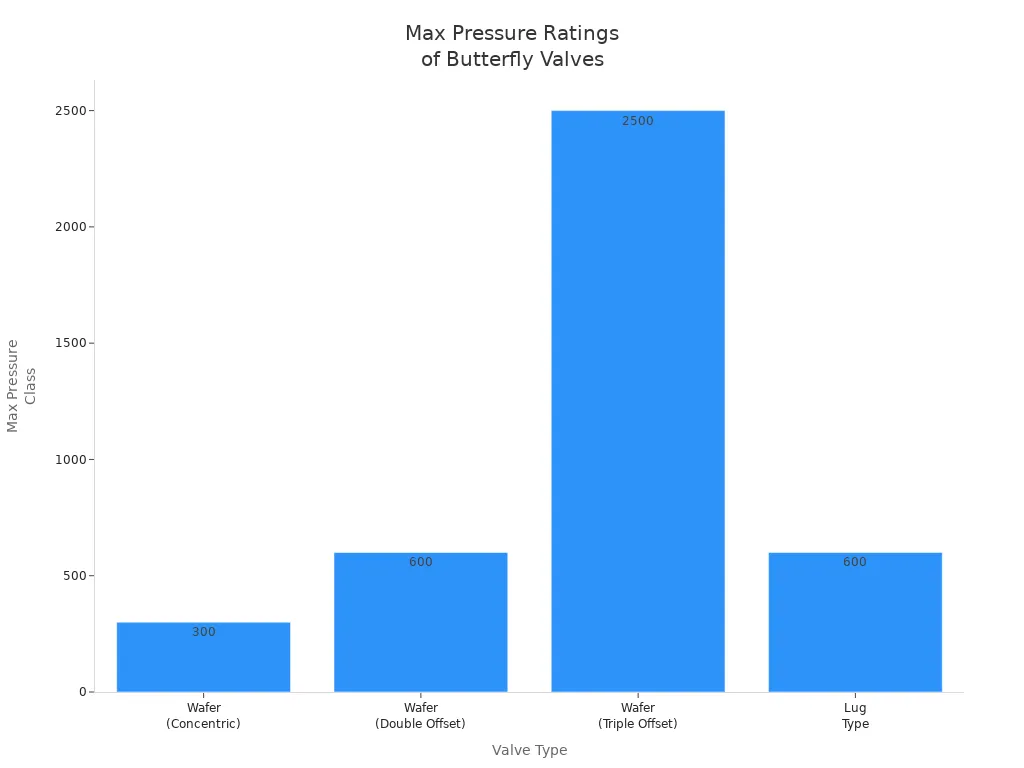
Lug butterfly valves can handle up to 150 psi and temperatures up to 200 °C. Wafer butterfly valves keep pressure going one way and are easy to install. You should pick the valve that matches your system’s pressure needs.
End-of-Line Service Suitability
Think about end-of-line service when choosing a valve. Lug butterfly valves let you take off one side of the pipe without stopping everything. This makes fixing things faster and easier. Wafer butterfly valves do not work for end-of-line service. You must shut down the pipeline and remove both flanges to fix them.
Here is a table comparing end-of-line suitability:
|
Valve Type |
End-of-Line Suitability |
Maintenance Requirement |
|---|---|---|
|
Lug Butterfly Valve |
Suitable |
One-side disassembly without affecting the pipeline |
|
Wafer Butterfly Valve |
Not Suitable |
Requires full pipeline disassembly for maintenance |
Lug butterfly valves are best for high-pressure and dead-end jobs. They give you more choices for repairs and pump removal. The strong bolts help keep the valve tight for tough jobs.
Isolation and Shutoff Performance
You want your system to shut off and isolate well. Lug butterfly valves let you block one side for repairs. Wafer butterfly valves cannot block one side. You have to take out the valve to work on the pipes.
|
Feature |
Wafer-Style Valve |
Lug-Style Valve |
|---|---|---|
|
Isolation Capability |
Cannot isolate one side |
Can isolate one side for maintenance |
Lug butterfly valves let you do dead-end service and shut off tightly. Wafer butterfly valves are not good for end-of-line service. You might see leaks if you use them at the end of a pipe with only one flange.
Tip: Pick lug butterfly valves for high-pressure, dead-end, and isolation jobs. Use wafer butterfly valves for regular flow control when full shutoff is not needed.
Space, Weight, and Cost Comparison
Space Efficiency in Piping Systems
You need to think about space when you build a piping system. Wafer butterfly valves help you save space. The body sits between two flanges, so you do not need extra room for bolts or thick valve bodies. TANGGONG VALVE designs wafer butterfly valves to fit tight spots. You can use them in places where pipes run close together. This makes them a smart choice for water treatment plants, HVAC systems, and chemical factories. Lug butterfly valves take up more space because the body has lugs and bolt holes. You need more clearance to install them. If you work in a small area, wafer butterfly valves make your job easier.
Weight Differences: Wafer vs. Lug Butterfly Valve
You must consider weight when you plan your system. Wafer butterfly valves weigh less than lug butterfly valves. The compact design uses fewer materials. You can lift and install wafer valves without heavy tools. Lug butterfly valves use more metal for the lugs and bolt holes. This makes them heavier. The extra weight can put more load on pipe supports, especially in horizontal pipes. You may need stronger supports for lug valves.
-
Wafer butterfly valves are compact and lightweight. You can use them in systems with space and weight limits.
-
Lug butterfly valves are heavier. You need more clearance and stronger supports for installation.
-
Wafer valves reduce stress on pipes and supports. Lug valves increase loads, so you must plan for this.
Cost Factors and Budget Considerations
You want to spend your money wisely. Wafer butterfly valves cost less to buy. You pay less for the valve and for installation. If you do not need frequent repairs, wafer valves help you save money. Lug butterfly valves cost more at first. The strong body and lugs add to the price. You pay more for installation and supports. Lug valves save money over time if you need repairs often. You can fix one side of the pipe without shutting down the whole system. This reduces downtime and labor costs.
|
Valve Type |
Initial Cost |
Long-term Maintenance Considerations |
|---|---|---|
|
Wafer Butterfly |
Lower |
Can lead to high TCO in frequent maintenance scenarios due to extended downtime |
|
Lug Butterfly |
Higher |
Higher initial cost offset by savings in reduced downtime and labor, leading to lower TCO in critical systems |
Tip: If you want a valve for a simple system, wafer butterfly valves help you save space, weight, and money. If you need easy repairs and less downtime, lug butterfly valves are worth the higher price.
Applications: Wafer Butterfly Valve and Lug-Style Butterfly Valve
Common Uses for Wafer Butterfly Valve
Wafer butterfly valves are used where space is tight. You can find them in water treatment plants and HVAC systems. They are also used in chemical factories. These valves help control flow in big pipes. They shut off quickly and are easy to install. People use wafer butterfly valves for water distribution and cooling towers. They are also good for process lines. TANGGONG VALVE’s wafer butterfly valves work well for jobs needing fast action. They need little maintenance. Their small size fits tight spaces and lowers installation costs.
Tip: Pick wafer butterfly valves if you want a light valve for flow control in systems that are not critical.
Typical Applications for Lug-Style Butterfly Valve
Lug butterfly valves are best for systems needing repairs often. You can use them in pipelines where you must remove one side without stopping everything. Lug butterfly valves are used for process control and fire protection. They are also good for end-of-line isolation. TANGGONG VALVE’s lug butterfly valves have strong bodies and shut off well. You get more choices for fixing and designing your system.
Here is a table showing how lug-style butterfly valves are used in different industries:
|
Industry |
Application Examples |
|---|---|
|
Oil & Gas |
Used in piping systems needing dead-end service |
|
Chemical |
PTFE lined valves for chemical resistance and solvents |
|
Marine |
Used for fire protection, desalination, and ballast |
|
Energy |
Good for high temperatures and easy maintenance |
Note: Lug butterfly valves let you block parts for repairs. This makes them great for important systems.
Industry Examples: TANGGONG VALVE Solutions
TANGGONG VALVE butterfly valves are used in many industries. Oil and gas companies use them for safe shutoff and dead-end service. Chemical plants use PTFE-lined valves for tough chemicals. Marine jobs use these valves for fire protection and ballast systems. Energy plants use them for high heat and high pressure. TANGGONG VALVE has certifications like API 609, CE, and ISO 9001:2015. You get valves that meet strict safety and quality rules. There are over 500 series to choose from for your needs.
TANGGONG VALVE gives you strong, certified butterfly valves for every job.
Choosing the Right Butterfly Valve for Your Needs
Key Selection Factors
You should think about a few important things before picking a butterfly valve. Each point helps you find the best valve for your system. Think about how your system works and what you need from the valve.
-
End-of-Line Capability: Wafer butterfly valves cannot be used at the end of a pipeline. Lug butterfly valves can block the end and let you take off pipes on one side.
-
Maintenance Convenience: Lug butterfly valves make fixing easier. You can repair one side without stopping everything. This saves time and keeps your process going.
-
Strength and Pressure Rating: Lug butterfly valves are stronger. They handle more pressure and tough jobs. Wafer butterfly valves are good for lighter work.
-
Space and Cost Factors: Wafer butterfly valves use less space. They cost less and are simple to install. Lug butterfly valves cost more but help you fix things faster.
Match these points to your job. If you need fast repairs or high pressure, lug butterfly valves are a smart pick. If you want to save space and money, wafer butterfly valves are a good fit.
Tip: Always check what your system needs before picking a valve. The right valve keeps your job safe and working well.
Application-Based Recommendations
You need to think about where you will use the valve. Each job has its own needs. Look at the job and pick the valve that fits best.
-
Water treatment plants use wafer butterfly valves. These valves fit small spaces and control flow easily.
-
Chemical factories often need lug butterfly valves. They handle strong chemicals and let you fix pipes without stopping everything.
-
Marine systems use lug butterfly valves for fire protection and ballast control. You can block one side and keep the job running.
-
Energy plants need valves for high heat and pressure. Lug butterfly valves work well for these tough jobs.
-
HVAC systems use wafer butterfly valves. These valves save space and money, making them perfect for this job.
Ask experts if you are not sure which valve fits your job. TANGGONG VALVE has many types for different jobs. You can find a valve that matches your job and keeps your system working well.
Note: Match the valve to your job. This helps you avoid problems and keeps your system safe.
TANGGONG VALVE Support and Expertise
You get strong help when you work with TANGGONG VALVE. The company helps you pick the right valve for your job. You can ask for help with sizing, materials, and actuator choices. TANGGONG VALVE checks your process data and suggests the best valve for your job.
|
Support Type |
Description |
|---|---|
|
Engineering Support |
You get help with valve sizing, body materials, and actuator setups for your job. |
|
Valve Selection Guidance |
You can share your process details. TANGGONG VALVE suggests the right valve for your job. |
|
Maintenance Resources |
You receive guides and tips to keep your job running smoothly with proper valve care. |
You can trust TANGGONG VALVE to help you every step of the way. The team gives you advice and resources. You get answers to your questions and help for your job. This makes your system safer and more reliable.
Tip: Reach out to TANGGONG VALVE for expert help. You get the right valve and support for your job.
You can spot the main differences between wafer and lug butterfly valves. Lug butterfly valves are strong and easy to fix. They work well with high pressure. Wafer butterfly valves help you save space and money. They are good for jobs with lower pressure. Picking the right valve helps your system work better and break down less. TANGGONG VALVE gives you good butterfly valves and expert help. You also get support, special solutions, and training for what you need.
|
Service Type |
Description |
|---|---|
|
Expert Advice |
Help with picking valves and choosing materials |
|
Customized Solutions |
Products made to fit what you need |
Contact TANGGONG VALVE to get the best butterfly valve and support.
FAQ
What is the main difference between wafer and lug butterfly valves?
A wafer butterfly valve goes between two flanges. You clamp it in place. A lug butterfly valve bolts right to each flange. Lug valves let you take off one side of the pipe. The rest of the system keeps working.
Can you use a wafer butterfly valve for dead-end service?
No, you cannot use a wafer butterfly valve for dead-end service.
You must turn off the whole pipeline to fix or remove it. Lug butterfly valves let you do dead-end service. They make repairs easier.
Which industries use TANGGONG VALVE butterfly valves?
|
Industry |
Common Use |
|---|---|
|
Oil & Gas |
Safe shutoff |
|
Chemical |
Corrosive media control |
|
Marine |
Fire protection |
|
Energy |
High-pressure systems |
TANGGONG VALVE butterfly valves are used in many industries.
How do you choose the right butterfly valve?
Think about what your system needs. If you want easy repairs and high pressure, pick a lug butterfly valve. If you need to save space and money, choose a wafer butterfly valve. Ask TANGGONG VALVE for expert help.