



A high temperature ball valve helps you manage liquids or gases in very hot places. Many industries use these valves to make sure things stay safe and work well. You can see them in oil and gas, chemical plants, and power stations. The demand for these valves keeps rising because they work well in hard situations. TANGGONG VALVE is a trusted supplier and has important certifications and awards for quality, safety, and new ideas.
Key Takeaways
-
High temperature ball valves help control hot liquids and gases. They work well even when it is very hot, up to 400 °C. - Pick valves made from strong stuff like stainless steel or Inconel. These materials last long and do not get damaged by heat or rust. - You should check and clean your ball valve often. This stops leaks and helps your ball valve last longer. - TANGGONG VALVE has many good ball valves to choose from. They can give you advice so you pick the best one for your job. - Knowing about pressure ratings and valve types is important. This keeps things safe and helps everything work well in tough places.
What Is a High Temperature Ball Valve
Basic Function
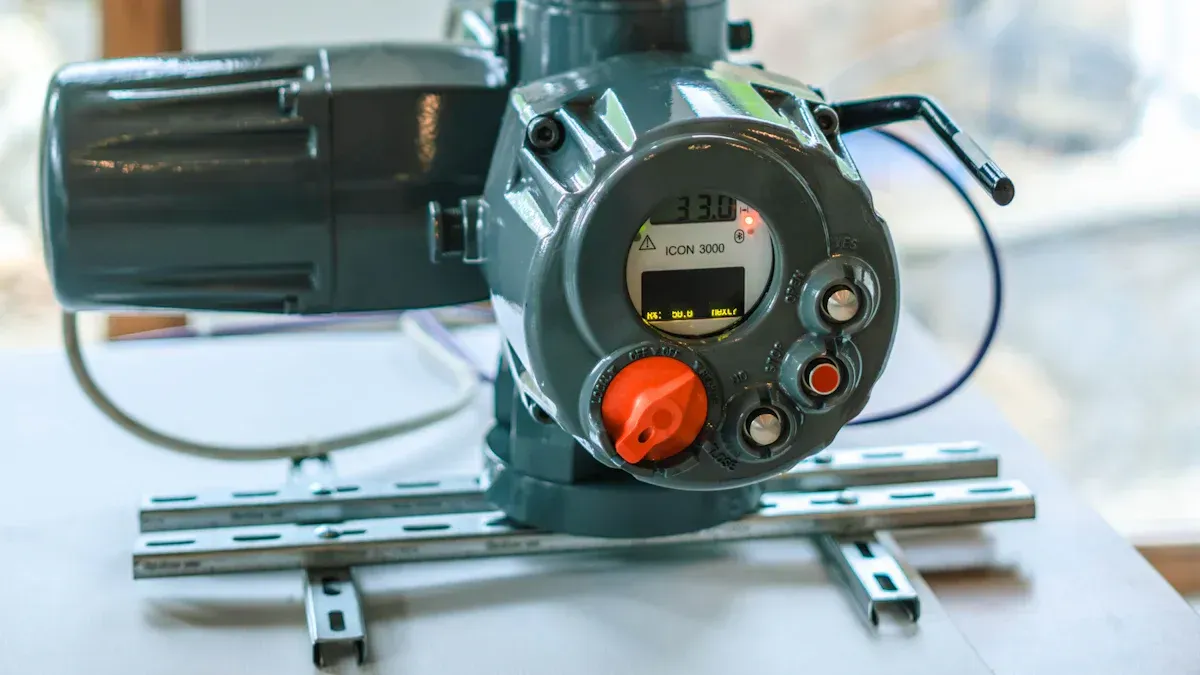
A high temperature ball valve lets you control liquids or gases in very hot places. It works where heat can go up to 400 °C. You see these valves in metallurgy, chemical plants, fertilizer factories, steam power stations, oil and gas pipelines, and petrochemical facilities. These valves help keep things safe and running smoothly.
A high temperature ball valve works fast and is strong. You can open or close it quickly. This helps in emergencies or normal jobs. The valve does not burn easily, so you can use it with flammable stuff. There are different types like two-piece, three-piece, side-entry, top-entry, welded-body, full-port, and reduced-port. Each type is made for a special job.
Tip: When picking a high temperature ball valve, check for strength, durability, adaptability, fire resistance, repairability, and leak resistance. These features help the valve work well in tough places.
TANGGONG VALVE is a top maker of high temperature ball valves. The company started in 1990. Now, it has over 2,200 workers. TANGGONG VALVE has certifications like ISO9001:2015, CE, TUV, SGS, API 6D, and API 607. You get good products because they focus on research, new ideas, and quality. Their valves meet world standards and use new technology.
Key Components
A high temperature ball valve has many important parts. Each part helps the valve work well in very hot places.
-
The valve body is the main part. It holds the ball, seat, and stem. The body gives strength and lasts a long time.
-
The valve seat goes around the ball. It makes a tight seal so nothing leaks. The seat must handle high heat and not wear out.
-
The valve stem links the actuator to the ball. You turn the stem to move the ball and control flow. Stem packing stops leaks near the stem.
-
These valves use strong materials like stainless steel or alloy steel. These materials keep the valve tough in heat.
-
The design makes it easy to use and fix the valve. You get less friction and wear, so the valve lasts longer.
-
Good sealing stops leaks. You get smooth operation in important jobs.
|
Component |
Function |
Material Used |
|---|---|---|
|
Valve Body |
Holds ball, seat, and stem; gives strength |
Stainless steel, alloy |
|
Valve Seat |
Seals ball; stops leaks |
PTFE, PEEK, metal |
|
Valve Stem |
Links actuator to ball; lets you operate |
Stainless steel, alloy |
|
Stem Packing |
Stops leaks near stem |
High-temp resistant |
Each part helps the high temperature ball valve handle heat and pressure. You get safe and steady flow control.
Features of High Temperature Ball Valves
Materials and Construction
High temperature ball valves need tough materials. These materials help the valve work in very hot places. You often see cast steel, stainless steel, and hard alloys used. Each material has its own heat limit and special traits.
Here is a table showing common materials and their properties:
|
Material |
Maximum Temperature |
Hardness Coefficient |
Characteristics |
|---|---|---|---|
|
Cast Steel (ASTM A216 WCB) |
425°C |
HRC45-58 |
Good mechanical and heat performance, fits large ball valves. |
|
2CR13 Nitriding (2CR13 STL) |
250°C-425°C |
HRC45-58 |
Better surface hardness and wear resistance, resists corrosion well. |
|
STL Hard Alloy |
Extremely high |
HRC68-72 |
Very hard and resists wear, used for sealing surfaces. |
|
ASTM A217 WC6 |
590°C |
HRC68-72 |
Handles high heat and has strong properties, fits ultra-high temperatures. |
|
SUS310S Stainless Steel |
1035°C |
N/A |
Stays stable at high heat, resists corrosion, needs strict carbon control. |
You can see how these materials compare in their heat limits:
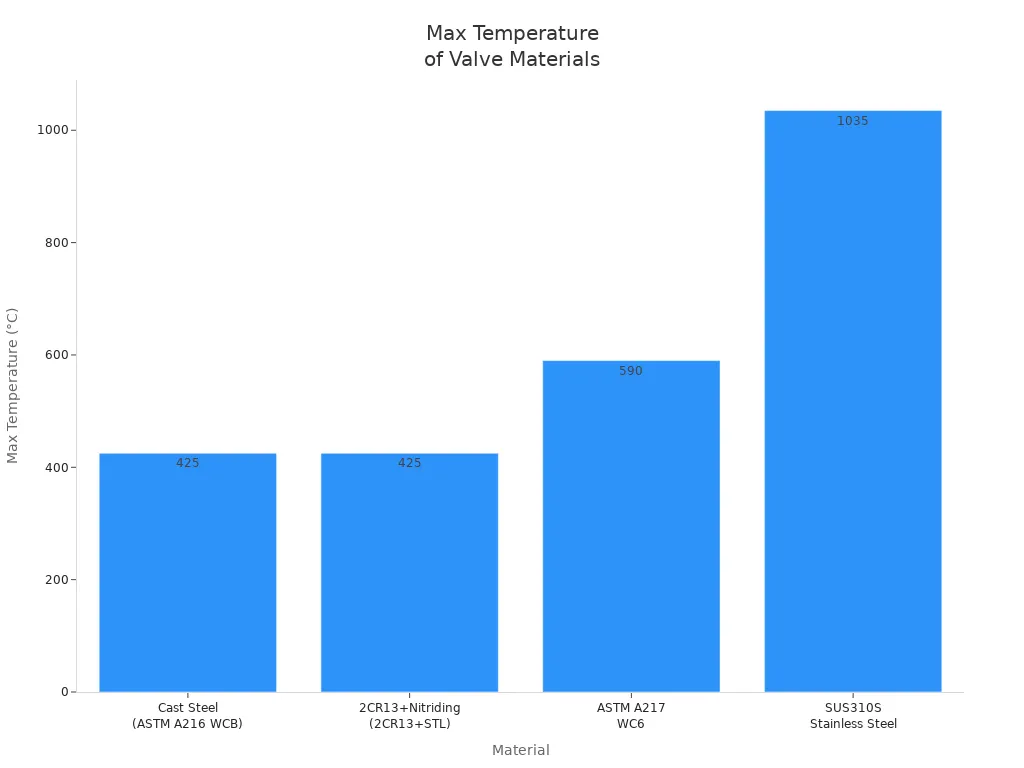
When picking a high temperature ball valve, think about where it will be used. Some materials fight corrosion and wear. Others stay strong even after long heat exposure. Choosing the right material gives you better performance and longer life.
Sealing and Design
The design of high temperature ball valves helps you control flow well. Advanced sealing systems stop leaks and keep the valve working for years. Special seats made from PTFE, PEEK, or metal-to-metal contact handle heat and pressure. These seats keep the ball valve tight and safe.
You also see extra support in the valve body. This makes the valve strong and helps it handle stress. The stem and packing use materials that resist high heat. You get smooth operation and less friction.
Here are some features that help high temperature ball valves work well:
-
Advanced sealing stops leaks and makes the valve last longer.
-
Extra support gives the valve strength and reliability.
-
Material choice helps the valve resist abrasion and corrosion.
-
Special actuation systems let you control the valve with precision.
Note: Always check the pressure ratings when picking a ball valve. High temperature ball valves use CWP (Cold Working Pressure), SWP (Steam Working Pressure), and WOG (Water, Oil, Gas) ratings. These ratings show how much pressure the valve can handle at different temperatures.
|
Acronym |
Description |
|---|---|
|
CWP |
Cold Working Pressure, highest pressure for valves at normal temperatures (-20°F to 100°F). |
|
WOG |
Water, Oil, and Gas, a pressure rating for these materials at normal temperatures, not used much now. |
|
SWP/WSP |
Steam Working Pressure, highest pressure for steam at the top temperature rating for severe service ball valves. |
TANGGONG VALVE Ball Valve Series
You can trust TANGGONG VALVE for high temperature ball valves. The company uses advanced materials and designs to give you reliable flow control. TANGGONG ball valves use stainless steel, duplex steel, Inconel, and other strong alloys. You find seats made from PTFE, RPTFE, Nylon, PEEK, and metal-to-metal options.
TANGGONG ball valves offer:
-
Quick operation with a quarter-turn mechanism.
-
Tight sealing for bubble-tight shut-off.
-
Low pressure drop for efficient flow control.
-
Fire-safe designs and anti-static devices.
-
Meets API 6D, CE, TUV, ISO 9001:2015, and other certifications.
You can pick floating or trunnion-mounted ball valves. Sizes range from DN15 to DN2000 and pressure classes from Class 150 to Class 2500. TANGGONG VALVE tests every ball valve to meet strict standards. You get a valve that works in oil and gas, chemical plants, power stations, and marine jobs.
Tip: If you need help picking the right high temperature ball valve, TANGGONG VALVE gives free consulting. You can ask their engineering team for advice about flow control, pressure, and temperature needs.
You get a ball valve that lasts longer, works better, and keeps your operation safe. TANGGONG VALVE leads the global valve industry with quality and new ideas.
How High Temperature Ball Valves Work
Ball Mechanism
You control the flow of liquids or gases with a ball valve. Inside, a round ball with a hole sits between two seats. When you turn the handle, the ball rotates. If the hole lines up with the pipe, fluid flows through. If you turn the ball, the flow stops. This simple design gives you quick and reliable flow control.
When you use a ball valve in high temperature places, you face special challenges:
-
High fluid temperatures can cause the ball valve to overheat.
-
If the system settings are wrong, heat can rise too much.
-
Without cooling, overheating gets worse.
-
Thermal expansion makes parts swell or stick.
-
Seals can break down, causing leaks and pressure loss.
-
Using materials that expand at the same rate helps prevent problems.
If overheating happens, the ball valve can lose its sealing power. You might see leaks or even mechanical failure. This can affect your whole system.
Performance Under Heat
A ball valve must meet strict standards to work well under heat. You want to trust your flow control, even when temperatures rise. Here is a table showing some important standards:
|
Standard |
Description |
|---|---|
|
ASME B16.34 |
Sets pressure limits and material rules for high temperatures. |
|
ISO 15848 |
Checks for leaks and tests seal strength. |
|
API 6D |
Lists rules for oil and gas valves, including heat and toughness tests. |
|
API 607 |
Requires fire testing for valves in hydrocarbon fires. |
|
ASTM Standards |
Makes sure the valve parts have the right mix and strength. |
You get a ball valve that uses advanced materials like Inconel or Hastelloy. These metals stay strong when hot. Sealing is a big challenge. Regular seals melt or break, so you need metal-to-metal seals. Managing thermal expansion is also key. If parts expand at different rates, the ball valve can stick or leak.
Manufacturers test ball valves before you use them. They check how the valve works at first, then after some use, and finally after a long time. This helps you know when the ball valve might need fixing or replacing. You can trust a well-made ball valve for safe and steady flow control, even in tough heat.
Differences from Standard Ball Valves
Material Upgrades
When you look at a high temperature ball valve, you see it uses special metals. These metals can handle much more heat than regular ones. Some of these metals are Inconel 625, Hastelloy C-276, and Stellite alloys. Standard ball valves use stainless steel like 316, 17-4 PH, or 440C. These work well, but only up to a certain heat.
Here is a table that shows the difference:
|
Valve Type |
Material Composition |
Temperature Resistance |
|---|---|---|
|
High Temperature Ball |
Superalloys (Inconel 625, Hastelloy C-276, Stellite alloys) |
Up to 800°C |
|
Standard Ball |
Stainless steel grades (316, 17-4 PH, 440C) |
Up to 400°C |
High temperature ball valves work better because their metals do not break or change shape in high heat. Some even use SUS310S stainless steel, which works up to 1035°C. This metal also fights rust, so it is good for tough jobs.
Note: You need strong metals with high melting points for high temperature ball valves. Metals like aluminum alloys or bronze do not work because they cannot take the heat.
Heat Resistance
A high temperature ball valve keeps working when things get really hot. It gives you good flow control and tight sealing, even at 800°C. Here are some ways these valves stay strong in heat:
-
High temperature ball valves work from 400°C to 800°C.
-
They keep a tight seal even in extreme heat.
-
Special metals help them fight rust and heat damage.
-
SUS310S stainless steel stays stable at very high heat.
-
Careful carbon control in SUS310S gives the best results.
You might see that high temperature ball valves cost more at first. This is because they use better metals and need special making. But over time, you save money because they last longer and need less fixing. You also avoid losing money from broken valves.
A high temperature ball valve helps you feel safe in hard jobs. You get steady work and safety, even when it is very hot.
Applications of High Temperature Ball Valves
Industrial Uses
High temperature ball valves are used in many industries. These valves help control hot liquids and gases safely. Here are some places where you might see a ball valve:
-
Crude oil plants use ball valves to separate products when it is hot.
-
Steam power plants use ball valves to control steam and keep things safe.
-
Oil and gas companies use ball valves for pipelines and processing units.
-
Fertilizer factories use ball valves to handle hot chemicals during production.
-
Steel mills use ball valves in processes where heat is very high.
-
Food and beverage companies use ball valves for cooking and cleaning systems.
-
Pharmaceutical plants use ball valves for easy cleaning and safe handling of hot fluids.
Ball valves work in many jobs. Each industry needs good flow control, especially when it gets hot. You want a valve that does not leak or break under stress.
When you put a ball valve in a chemical plant, you must follow strict rules. These rules protect workers and the environment. Here is a table with some important requirements:
|
Regulatory Agency |
Requirement Description |
|---|---|
|
EPA |
Pick materials that can handle dangerous chemicals and high heat. |
|
OSHA |
Make sure the ball valve meets safety rules for pressure and pipes. |
|
ASTM |
Test materials to see if they resist chemical damage. |
|
ASME |
Check that the valve meets pressure and temperature ratings. |
|
FDA |
Use materials that are safe for making medicine. |
|
API |
Follow rules for material grades and testing in chemical service. |
TANGGONG VALVE Solutions
TANGGONG VALVE is a trusted company for high temperature ball valves. They offer many types of ball valves for oil and gas, power plants, and chemical factories. TANGGONG VALVE makes each ball valve strong so it can handle high heat and pressure. You get tough materials, tight seals, and easy operation.
TANGGONG VALVE tests every ball valve to meet world standards. You can pick different sizes, pressures, and ways to control the valve. If you need help, TANGGONG VALVE gives expert advice to help you choose the right ball valve for your job. You can trust their experience to keep your flow control safe and reliable.
Maintenance Tips for Ball Valves
Taking care of your ball valve helps stop leaks and saves money. You can do a few easy things to keep your valve working well, even when it gets very hot.
Inspection
Check your ball valve often to make sure it works right. Look for any damage, rust, or leaks. Use tools like infrared thermography to find hot spots. Hot spots can mean there is too much friction or not enough oil. Condition-monitoring devices help you see how your ball valve is doing over time. Advanced acoustic systems listen for strange sounds. These sounds can show leaks or worn parts. If your system is automated, digital twin technology can help. It can tell you when to fix or change parts. Always check the disk, shaft, and seat. These parts get the most stress.
Tip: Make a maintenance schedule that fits how much you use the ball valve, the pressure, and the temperature. If your valve works in tough jobs, check it more often.
Cleaning
Clean your ball valve to help it work better. Pick cleaning agents that are safe for the materials inside your valve. Stainless steel 316L does not get hurt by acids or chlorides. This makes it good for many cleaners. PTFE seats can take strong chemicals and high heat. EPDM works with hot water and steam. Viton is best for oils and solvents when it is hot. Always follow your plant’s cleaning rules so you do not hurt the valve. Clean both the inside and outside to get rid of dirt and buildup.
Replacement
Change any parts that are worn out or broken before they cause trouble. Use the table below to help you know when to change parts for your job:
|
Application Type |
Recommended Interval |
|---|---|
|
Critical Service |
3-6 months |
|
Standard Industrial Service |
6-12 months |
|
General Service |
12-24 months |
|
High-Pressure Applications |
Quarterly inspections |
|
Severe Service (High-Temperature) |
90-day inspection cycles |
Always use good replacement parts. This helps your ball valve last longer and keeps your system safe.
Now you know why high temperature ball valves are important for hard jobs. Look at the table below to see the main ideas:
|
Key Point |
Description |
|---|---|
|
Operating Temperature |
Can work up to 400 °C and stay strong. |
|
Material Composition |
Made with tough metals like carbon steel and stainless steel. |
|
Applications |
Used in metallurgy, chemical plants, oil and gas, and power plants. |
|
Types of Valves |
Has many designs for different jobs. |
|
Benefits |
Works fast, lasts long, stops fires, and prevents leaks. |
-
Safety rules keep people and machines safe.
-
TANGGONG VALVE is known for good quality and new ideas.
-
You can visit their website to learn more or pick a product.
FAQ
What is the main job of a high temperature ball valve?
You use a high temperature ball valve to control the flow of hot liquids or gases. It helps you start or stop the flow quickly and safely in places where heat is very high.
How do you know when to replace a ball valve?
You should replace your ball valve if you see leaks, rust, or if it does not open and close smoothly. Regular checks help you spot problems early and keep your system safe.
Can you use a high temperature ball valve as a shut-off valve?
Yes, you can use a high temperature ball valve as a shut-off valve. It gives you quick and reliable control, making it easy to stop the flow in emergencies or during maintenance.
What materials work best for high temperature ball valves?
You get the best results with stainless steel, Inconel, or other strong alloys. These materials handle high heat and resist rust, so your valve lasts longer in tough jobs.
Why should you choose TANGGONG VALVE for your ball valve needs?
TANGGONG VALVE gives you high-quality products, strict testing, and expert advice. You can trust their valves to work well in hot and demanding places.