



You use an industrial ball valve to control how liquids or gases move in pipes. This device is a quarter-turn valve. You only need to turn the handle 90 degrees to open or close it. The ball inside makes a tight seal. This helps stop the flow very well in many systems. Industrial ball valves let you work fast and safe, especially in big factories and plants.
The global market for industrial ball valves was about USD 12.6 billion in 2025. It may grow to USD 22.8 billion by 2035.
You use industrial ball valves because they shut off well and make it easy to control the flow.
Key Takeaways
-
Industrial ball valves help control liquids and gases. They use a simple quarter-turn to open or close. This makes them fast and safe for many industries.
-
Picking the right ball valve material is very important. Stainless steel works well for most jobs. Special alloys are better for tough places.
-
Ball valves need regular care to work well. Check them at least once a year. This keeps them safe and working right.
-
There are different ball valve types, like floating and trunnion. Each type has its own job. Knowing about them helps you pick the best one.
-
Automating ball valves can make things easier and faster. You can control them from far away. This helps in emergencies and saves time.
Industrial Ball Valve Basics
Definition of Industrial Ball Valve
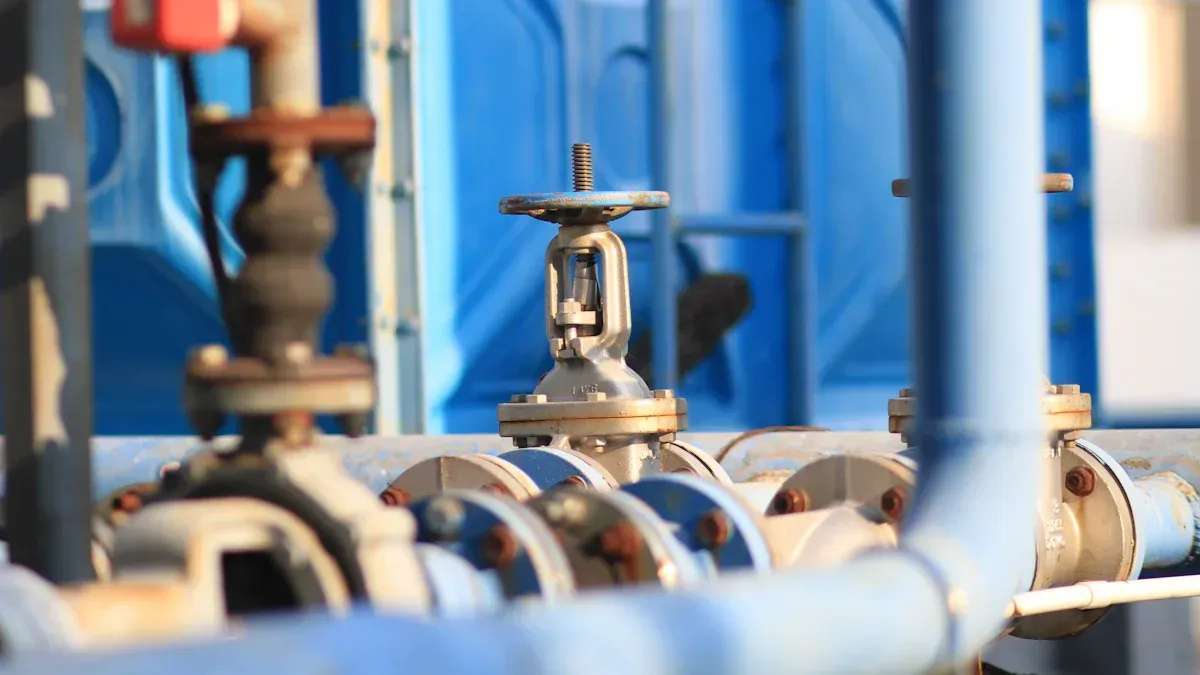
An industrial ball valve helps control liquids or gases in pipes. It uses a round ball with a hole in the middle. When you turn the handle, the ball moves to open or close the pipe. The main job of a ball valve is to start or stop flow fast and safely.
Industry groups make rules for ball valves. These rules help each ball valve work safely and last longer. They also make picking the right valve easier for you. Ball valves are used in oil and gas, water treatment, chemical plants, HVAC, and factories. Each industry needs ball valves because they shut off well and are simple to use.
Here is a table that shows how ball valves are different from other valves:
|
Characteristic |
Description |
Impact on Functionality |
|---|---|---|
|
Minimal Flow Restriction |
Ball valves let fluids pass easily, so pressure drops are low. |
This stops damage and makes things work better. |
|
Quick Operation |
You only need to turn the handle a little to open or close. |
This helps you shut pipes fast in emergencies. |
|
Design Variations |
Ball valves come in full port and reduced port types. |
This fits different jobs and needs in factories. |
How Industrial Ball Valves Work
You use a ball valve by turning the handle a quarter turn. When you turn it 90 degrees, the ball inside moves. If the hole matches the pipe, fluid goes through. If you turn the handle again, the solid part blocks the flow. This lets you open or close the valve quickly.
Ball valves have many good points:
-
The quarter-turn lets you open or close fast. You can act quickly if there is an emergency.
-
The tight seal stops leaks and keeps your system safe.
-
Full-bore ball valves let fluid move with almost no block. This saves energy and keeps pressure loss low.
You can pick full port or standard port ball valves. Full port has a hole almost as big as the pipe. This means low pressure drop and high flow. Standard port has a smaller hole, so pressure drop is higher but it may fit better in some places.
|
Feature |
Full Port Ball Valve |
Standard Port Ball Valve |
|---|---|---|
|
Bore size |
Almost pipe size |
Smaller than pipe size |
|
Pressure drop |
Very low |
Higher |
|
Flow coefficient (Cv) |
Higher |
Lower |
|
Pigging capability |
Usually works |
Often does not work |
You must match the ball valve’s pressure rating to your system. This keeps the valve from breaking. The flow coefficient, or Cv, shows how much fluid can go through the valve. A higher Cv means more fluid moves at the same pressure.
The way ball valves work makes them a favorite in many industries. You see ball valves in oil and gas, water treatment, chemical plants, HVAC, and factories. These valves give strong shut-off and easy control, even when things get tough.
Tip: Always check your system’s pressure and flow before picking a ball valve. The right valve keeps your work safe and running well.
Ball Valve Components
Ball Element
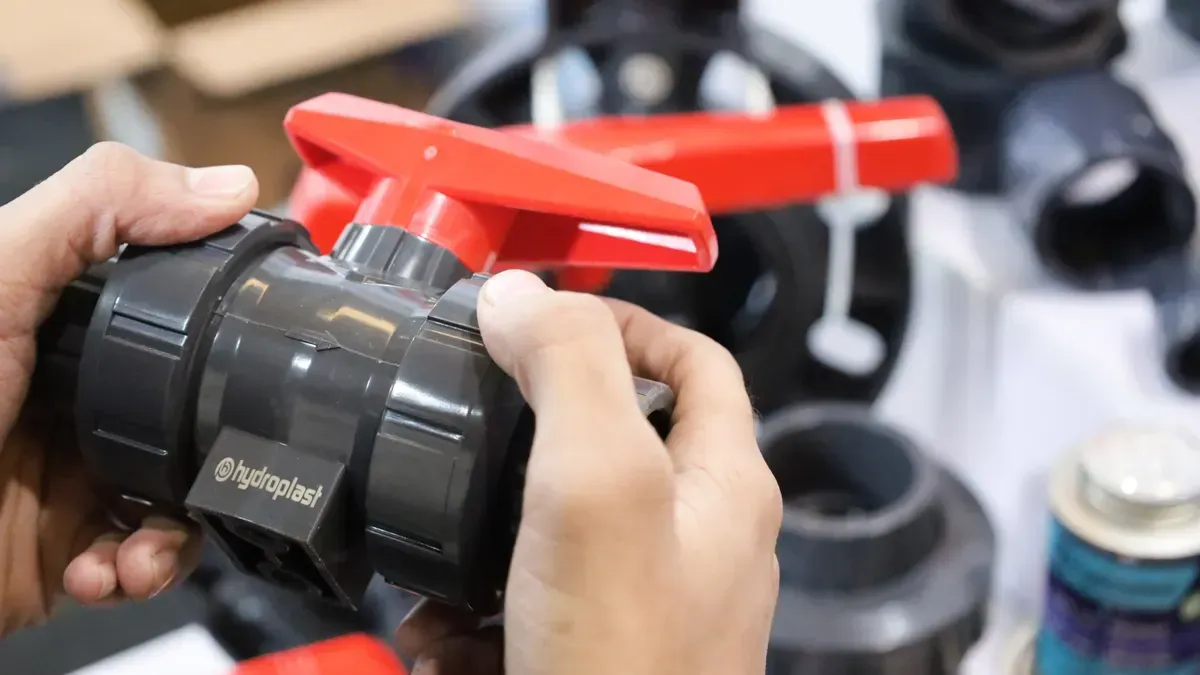
You find the ball element at the heart of every ball valve. This part is a round sphere with a hole through the center. When you turn the handle, the ball rotates to open or close the flow path. The ball must have a smooth surface to seal tightly against the seats. You want a ball that resists corrosion and keeps its shape under pressure.
Common materials for the ball element include:
-
Stainless steel. This material resists rust and keeps a smooth surface for a tight seal.
-
Chrome-plated steel. This option adds hardness, so you can use it with abrasive fluids.
-
Ceramic. You choose this for very harsh chemicals or high temperatures.
TANGGONG VALVE uses high-quality stainless steel, duplex steel, and Inconel for the ball element. These materials help the ball valve last longer and work well in tough jobs like oil and gas or chemical plants.
Tip: Always check the ball material to match your fluid and temperature needs.
Valve Body
The valve body holds all the parts together. It gives the ball valve its shape and strength. You want a strong body to handle high pressure and stop leaks. The body can have different shapes, such as cylindrical, conical, or spherical. Each shape has its own benefits.
-
Cylindrical bodies give you design flexibility, but you must control strength and avoid deformation.
-
Conical bodies cost less and help control welding changes.
-
Spherical bodies have good wall thickness and lower weight, but you need to watch for strength and welding issues.
Some ball valves use an all-welded body. This design removes bolted joints, making the valve more compact and strong. You get fewer places for leaks and a longer service life.
TANGGONG VALVE offers bodies made from WCB, stainless steel, duplex, Inconel, and other alloys. The company also makes full welded ball valves for buried pipelines, which stop leaks and last for decades.
Seats & Seals
Seats and seals keep the fluid from leaking around the ball. The seats press against the ball to make a tight seal when you close the valve. The material you choose for seats and seals affects how well the ball valve handles chemicals, heat, and wear.
The most common seat and seal materials include PTFE, reinforced PTFE, PEEK, Delrin, metal, and special alloys. Each material has its own strengths and limits.
|
Material Type |
Key Properties |
Limitations |
|---|---|---|
|
PTFE |
Handles most chemicals, non-stick, good for sealing |
Deforms at high heat, wears with abrasives |
|
Reinforced PTFE |
Stronger, handles higher temperatures |
Not for chlorine |
|
PEEK |
Works at very high temperatures, strong |
Sensitive to some chemicals |
|
Delrin |
Good for moving parts |
Breaks down in high pH |
|
Metal Seats |
Very durable, handles high heat |
Not for every fluid, can cost more |
|
Hastelloy C-276 |
Great for strong acids |
Only for special uses |
|
Super Duplex SS |
Resists cracking in salty water |
Not for every chemical |
TANGGONG VALVE uses PTFE, RPTFE, Nylon, PEEK, and metal seats in its ball valves. You can pick the right seat for your fluid, temperature, and pressure. This helps your valve last longer and work safely.
Stem & Handle
The stem connects the handle to the ball. When you turn the handle, the stem rotates the ball to open or close the valve. You want a strong stem that does not bend or break. The handle should feel easy to grip and turn.
Here are some important points for stem and handle design:
|
Consideration |
Description |
|---|---|
|
Torque Transmission |
The stem must grip the ball tightly so it does not slip when you turn it. |
|
Alignment |
Good support and bearings keep the stem straight and smooth. |
|
Material Selection |
You can choose carbon steel or stainless steel for strength and corrosion resistance. |
|
Maintenance |
Check and oil the stem often to keep it working well. |
TANGGONG VALVE uses anti-static devices and fire-safe designs in its ball valves. You get a handle that works smoothly and a stem that stands up to tough jobs. You can choose manual, electric, pneumatic, or hydraulic handles to fit your needs.
Note: Always check the stem and handle for easy use and safety before you install the ball valve.
Types of Ball Valves
Ball valves come in different designs. Each design works best for certain jobs. You need to know the main types to pick the right one.
Floating Ball Valves
Floating ball valves have a ball that moves a little inside the valve body. When you close the valve, fluid pressure pushes the ball against the seat. This makes a tight seal and stops leaks. You use floating ball valves for low or medium pressure systems. They work well in water supply, chemical plants, and gas lines.
|
Industry Sector |
Application Scenarios |
|---|---|
|
Chemical and Petrochemical |
Handles acids, caustics, and solvents; used in process isolation and toxic vapor containment. |
|
Water and Wastewater |
Used in drinking water supply lines and treatment plants for influent and effluent control. |
|
General Industrial and Utility |
Used in HVAC systems, compressed air networks, and low-pressure steam recovery. |
TANGGONG VALVE makes floating ball valves with strong sealing and easy use. You get reliable performance for many daily jobs.
Trunnion Ball Valves
Trunnion ball valves have supports at the top and bottom of the ball. These supports keep the ball in place and help seal both sides. You use trunnion ball valves in high-pressure systems. They work well in oil and gas pipelines, refineries, and power plants.
|
Feature |
Trunnion Ball Valve |
Floating Ball Valve |
|---|---|---|
|
Seal Creation |
Seal on the upstream side using pressure and trunnion supports. |
Seal on the downstream side, relying on pressure to push the ball against the seat. |
|
Movement |
Ball held in place for bi-directional sealing. |
Ball floats to create a seal depending on pressure direction. |
|
Pressure Handling |
Handles trapped pressure with relief features. |
Does not handle trapped pressure relief. |
|
Design Complexity |
More complex, can offer Double Block and Bleed (DBB). |
Simpler design, focuses on contact stress for sealing. |
You often see trunnion ball valves in oil and gas jobs. TANGGONG VALVE makes trunnion ball valves that meet strict rules and last a long time.
V-Port Ball Valves
V-port ball valves have a V-shaped notch in the ball or seat. This shape lets you control flow very precisely. You use v-port ball valves when you need to adjust flow rates exactly. These valves help save energy and cut waste.
-
You get great throttling for mixing and dosing.
-
The v-notch shape allows smooth flow and lowers pressure drop.
-
You use v-port ball valves in water treatment, food and drink, power plants, oil and gas, farming, chemical processing, and medicine factories.
-
These valves need less care and respond quickly.
TANGGONG VALVE’s v-port ball valves give you advanced flow control and high efficiency. You can trust them for important jobs.
Manual & Automated Ball Valves
You can use ball valves by hand or with machines. Manual ball valves have a handle you turn yourself. Automated ball valves use electric, air, or hydraulic actuators for remote or automatic control.
|
Feature |
Manual Ball Valve |
Automated Ball Valve |
|---|---|---|
|
Operation |
You turn the handle |
Operated by actuator |
|
Precision |
Limited by human action |
High precision and exact positioning |
|
Response Time |
Slower, depends on you |
Fast, responds in seconds |
|
Labor Needs |
Needs someone present |
Can be controlled remotely |
|
Safety Features |
Basic stops |
Can respond to safety triggers |
TANGGONG VALVE offers both manual and automated ball valves. You can pick the best type for your system, whether you want simple control or advanced automation.
Tip: Always choose the ball valve type that fits your process needs. The right choice keeps your system safe and efficient.
Ball Valve Materials
Stainless Steel & Alloys
You want your ball valve to last a long time. Stainless steel is strong and does not rust. It can handle high pressure without breaking. You do not have to fix or replace it often, so you save money. Stainless steel ball valves work in oil refineries and chemical plants. They also work in data centers. These valves can handle harsh chemicals. They do not corrode like carbon steel or bronze. This keeps your system safe and working well.
TANGGONG VALVE uses stainless steel, duplex steel, and Inconel. These materials help the valve work in very hot or cold places. You can use these valves for water treatment or in the ocean.
Tip: Pick stainless steel or special alloys for tough or changing places.
Seat Materials (PTFE, PEEK, etc.)
The seat material in your ball valve is important. It helps the valve seal well and last longer. PTFE and PEEK are two common seat materials. Each one has good points and some limits.
|
Material |
Advantages |
Limitations |
|---|---|---|
|
PTFE |
Low friction, resists chemicals, seals well, lasts long, keeps its shape, does not burn easily |
Can change shape in cold, does not work well with radiation, can have problems with pressure changes, does not like big temperature changes |
|
PEEK |
Very strong, works in high heat, resists many chemicals |
More friction than PTFE, not as good for low-friction jobs |
TANGGONG VALVE lets you choose PTFE, RPTFE, Nylon, PEEK, or metal seats. You can pick the best seat for your fluid, temperature, and pressure. This helps your valve seal tight and last longer.
Fire-Safe & Specialty Designs
You want your valve to be safe if there is a fire. Fire-safe designs stop leaks during a fire. Specialty designs help the valve work in dangerous places.
|
Standard |
Requirement |
Impact on Safety |
|---|---|---|
|
API 607 |
Valves must keep sealing at over 750°C |
Lowers risk of leaks in a fire |
|
ISO 10497 |
Valves must stay strong in a fire |
Stops big failures from happening |
-
Fire-safe designs let your valve handle high heat and not leak.
-
Specialty designs keep your system safe in risky places.
TANGGONG VALVE makes fire-safe ball valves that meet API 607 and ISO 10497. You can feel safe knowing your system is protected, even in very bad events.
Ball Valve Pros & Cons
Advantages in Industrial Use
Ball valves give you many good things in factories. They shut off fluid fast and safely. You only need to turn the handle a little. This helps you save time in emergencies or when fixing things. Ball valves close tightly, so they are great for turning flow on or off in pipes.
Here is a table that shows how ball valves help with care and work:
|
Advantage |
Description |
|---|---|
|
Reliability |
Fewer parts mean less breaking and longer use. |
|
Low Maintenance |
Strong build means you fix it less often. |
|
Ease of Maintenance |
Simple shape lets you check and fix it fast. |
|
Quick Responsiveness |
You can change flow right away. |
|
Effective Isolation |
You stop flow for repairs with little trouble. |
Ball valves help you use less energy. You can control flow well, so you waste less and save money. Automated ball valves let you change things quickly, which makes your system work better and cost less.
TANGGONG VALVE is special because it follows strict rules like ISO 9001:2015 and API 6D. You can trust these valves to shut off well in oil, water, and chemical plants.
Tip: Pick ball valves when you need fast shut-off and easy fixing.
Limitations & Challenges
Ball valves can have problems in hard places. Using them a lot can wear out the ball and seats. High pressure or rough fluids can cause damage and make it hard to seal well.
Here are some common problems:
-
Using the valve a lot can make it seal less well.
-
High pressure or rough fluids can hurt the ball and seats.
You can fix many of these problems by picking the right materials and designs. TANGGONG VALVE makes ball valves with strong metals and fire-safe parts for tough jobs. These valves have ISO 9001:2015 and API 6D, so you know they are safe and good quality.
Note: Always pick a ball valve that matches your system’s pressure, heat, and fluid for best results.
Industrial ball valves let you shut off flow quickly. They seal tightly and are simple to use. If you know about the parts, types, and materials, you can pick the best valve for your work. The table below explains why each thing is important:
|
Factor |
Importance |
|---|---|
|
Material Selection |
Stops rust and keeps the valve working well |
|
Valve Size |
Fits how much fluid you need and prevents leaks |
|
Type of Ball Valve |
Works best for your job |
When you choose a ball valve, check how much pressure and heat it can handle. Make sure the materials match your fluid. Pick the right size for your pipes. Watch for leaks and use good packing materials. This keeps your system safe and working smoothly.
FAQ
What is the main use of an industrial ball valve?
You use an industrial ball valve to start or stop the flow of liquids or gases in pipes. These valves work best when you need quick shut-off and reliable sealing.
How do you choose the right ball valve material?
You match the material to your fluid, temperature, and pressure. Stainless steel works for most jobs. For harsh chemicals or high heat, you pick special alloys like Inconel or duplex steel.
Can you automate a ball valve?
Yes, you can add electric, pneumatic, or hydraulic actuators to automate a ball valve. This lets you control the valve from a distance or set it to work automatically.
How often should you maintain a ball valve?
You should check and clean your ball valve at least once a year. If you use it in tough conditions, inspect it more often to keep it working safely.
What certifications should you look for in a ball valve?
Look for certifications like ISO 9001:2015, API 6D, and CE. These show the valve meets global safety and quality standards.