



You use a trunnion ball valve to control how liquids or gases move in pipes. This valve has a ball that is held by strong supports. This makes it good for high pressure and big pipes. You see trunnion ball valves in many places. These include oil and gas, chemical plants, water treatment, and power plants. The valve gives a tight seal and is easy to use. This helps keep systems safe and working well.
|
Industry |
Application Description |
|---|---|
|
Oil & Gas |
Used to stop flow, clean pipes, and shut off in drilling, making oil, moving oil, and refineries. |
|
Chemical Processing |
Handles many chemicals with materials that do not rust and seals very well. |
|
Water & Wastewater Treatment |
Controls how water, thick liquids, and chemicals move in cleaning processes. |
|
Power Generation |
Used in fuel pipes, cooling water systems, and other utility jobs. |
Key Takeaways
-
Trunnion ball valves help control flow in big pipes. They work well in high-pressure systems. This makes them good for oil and gas, chemical plants, and power plants.
-
The trunnion design keeps the valve steady. It also makes it easier to use. This helps the valve seal well and last a long time.
-
Pick a trunnion ball valve for high pressure and big pipes. Floating ball valves work better for small pipes and low pressure.
-
Doing regular maintenance is important. Choosing the right materials helps too. This can stop leaks and hard turning. It keeps the valve working well.
TANGGONG VALVE products follow strict world rules. This makes them safe and reliable in tough places.
Trunnion ball valve components
You find several important parts inside a trunnion ball valve. Each part plays a key role in making the valve work well and last long. Let’s look at these components one by one.
Ball
The ball sits at the center of the trunnion ball valve. You see a round, solid shape that controls the flow. When you turn the ball, you open or close the valve. The ball stays fixed in place because of the trunnion supports. This design keeps the ball centered and helps create a leak tight seal. The ball uses strong materials like stainless steel, carbon steel, or special alloys. In a metal seated ball valve, the ball and seats use solid metals for extra durability.
Tip: The ball remains centered, so you get reliable sealing even under high pressure.
Trunnion
The trunnion is a special support system. You find two trunnions, one at the top and one at the bottom of the ball. These trunnions fit into bearings inside the valve body. The upper trunnion connects to the stem, while the lower trunnion gives extra support. This setup keeps the ball from moving sideways or up and down. The trunnion absorbs pressure and reduces stress on the seats. You need less force to operate the valve, which is great for large or high-pressure systems.
-
The ball is anchored by the stem and trunnion.
-
The trunnion keeps the ball fixed and aligned.
-
The trunnion design lowers operating torque.
Seats
Seats surround the ball and help seal the valve. You see seats made from tough materials like PTFE, PEEK, PCTFE, or Devlon. These materials handle high temperatures and pressures. In a metal seated ball valve, the seats use metals like Stellite or Tungsten Carbide. The seats press against the ball, stopping leaks and keeping the valve tight.
|
Material |
Temperature Range |
Pressure Rating |
Key Properties |
|---|---|---|---|
|
PEEK |
-100°C to 250°C |
Up to 2500 LB |
Tough, chemical resistant, self-lubricating |
|
PCTFE |
-200°C to 125°C |
≤900 LB |
Low-temp performance, high-pressure sealing |
|
DEVLON |
-50°C to 175°C |
Up to 1500 LB |
Reliable sealing, low torque |
Body
The body holds all the parts together. You see the body made from forged or cast metals. The body gives strength and protects the inside parts. The trunnion ball valve body handles high pressure and keeps the valve safe. Choosing the right metal helps the valve resist corrosion and last longer.
|
Component |
Description |
Typical Materials |
|---|---|---|
|
Valve Body |
The main structural part that houses all internal components. |
Forged or cast metals |
|
Ball |
A spherical closure that controls fluid flow. |
Stainless steel, carbon steel, alloys |
|
Stem |
Connects to the actuator or handle to transmit rotational movements. |
Various metals |
|
Seats & Seals |
Vital for sealing and preventing leakage. |
Elastomers (Nitrile, Viton), PTFE, graphite |
Stem
The stem connects the actuator or handle to the ball. You turn the stem to rotate the ball and control the valve. The stem passes through the body and seals tightly to stop leaks. The stem links to the upper trunnion and helps secure the ball. You can operate the stem by hand or with an actuator.
-
The stem transmits torque to the ball.
-
The stem seals the valve and prevents leaks.
-
The stem regulates the ball’s movement.
You now know the main parts of a trunnion ball valve. Each component works together to give you a strong, reliable, and leak tight seal, especially in a metal seated ball valve.
How a trunnion ball valve works
Flow control
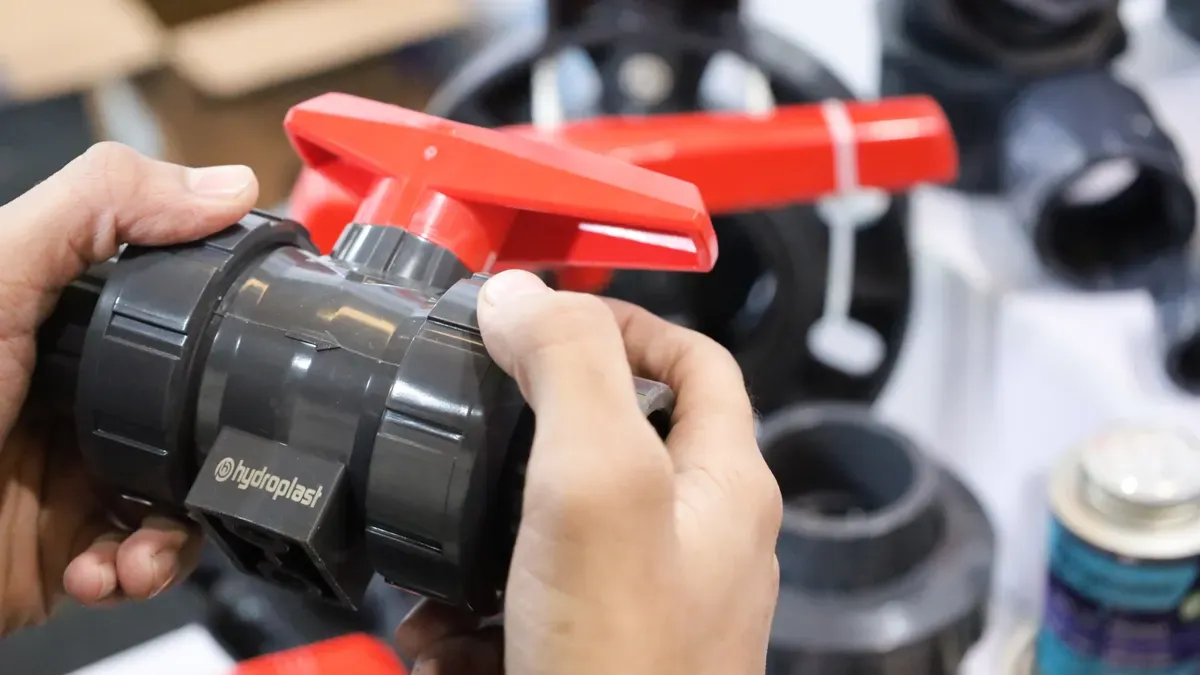
A trunnion ball valve helps you control liquids or gases in pipes. The ball inside has a hole in the middle. When you turn the handle, the hole lines up with the pipe. This lets liquid or gas move straight through. If you turn the ball so the solid part faces the pipe, the flow stops. The seats around the ball press tightly to stop leaks.
-
The ball lines up for full flow.
-
Turning the handle 90 degrees blocks the flow.
-
The seats make a tight seal when closed.
Trunnion ball valves are used where safe flow control is important. These valves can handle very high pressure, up to Class 2500. You see them in oil and gas pipes, water systems, and chemical plants. The trunnion ball valve lets you control flow exactly and makes shut-off easy.
Note: Trunnion ball valves seal both ways. You can block flow from either side. This keeps your system safe and flexible.
Opening and closing
You open or close a trunnion ball valve with a quarter-turn. When you turn the handle or actuator 90 degrees, the ball moves from open to closed. In the open spot, the hole in the ball matches the pipe. Liquid or gas flows through easily. In the closed spot, the solid part blocks the flow. The seats push against the ball to stop leaks.
-
You turn the stem to move the ball.
-
The valve opens or closes with a quarter-turn.
-
Spring-loaded seats help keep the seal tight.
Trunnion ball valves work well in long pipelines. You can shut them off fast and use them easily. These valves protect your system by stopping flow when needed. They also let you safely release trapped pressure before fixing the valve, using Double Block and Bleed.
|
Position |
Ball Alignment |
Flow Status |
Sealing Action |
|---|---|---|---|
|
Open |
Hole lines up |
Flow allowed |
Seats seal around ball |
|
Closed |
Solid part blocks |
Flow stopped |
Seats press tightly |
Trunnion support
The trunnion gives extra support to the ball. You find the trunnion at the top and bottom of the ball. This keeps the ball steady and in place. The trunnion takes on pressure from the flow. This means the ball and seats last longer. You do not need much force to turn the ball, even in big or high-pressure valves.
-
The trunnion takes pressure from the flow.
-
The trunnion lowers stress on the ball and seats.
-
You use less force to turn the valve.
Trunnion ball valves help you control flow in large pipes. The trunnion design makes it easier to open and close the valve. You get steady use and long life. The valve stays strong, even with high pressure or tough liquids.
Tip: Trunnion ball valves have strong seals and support. You get safe shut-off, less wear, and easy use in hard jobs.
|
Failure Mode |
Causes |
Mitigation Strategies |
|---|---|---|
|
Seat leakage |
Wear, chemicals, or particles |
Use metal seats, filters, right seat material |
|
Stem leakage / emissions |
Packing problems, heat changes |
Use live-loaded packing, install correctly |
|
High breakaway torque |
Rust, buildup, cold starts |
Use coatings, anti-seize treatments |
|
Ball scouring |
Cavitation, rough flow |
Size right, harden ball, use metal seats |
|
Actuator failure |
Small actuator, poor care |
Size actuator right, service often |
|
Fire damage (soft seats) |
Fire outside the valve |
Use fire-safe design, add metal seats |
Now you know how a trunnion ball valve works. It controls flow, opens and closes easily, and uses trunnion support to stay strong. These valves keep your pipes safe, stop leaks, and are easy to use, even in tough places.
Trunnion ball valve vs floating ball valve
Main differences
There are two main types of ball valves. These are floating and trunnion. Each type works in its own way. The differences change how you use them in your system.
|
Feature |
Floating Ball Valve |
Trunnion Ball Valve |
|---|---|---|
|
Ball support |
Stem only |
Top and bottom trunnions |
|
Sealing mechanism |
Line pressure pushes ball |
Spring-loaded seats press ball |
|
Typical size range |
Up to 6″ (DN150) |
2″ – 60″ |
|
Pressure range |
Class 150 – 600 |
Class 150 – 2500 |
|
Operating torque |
Rises with pressure and size |
Stays low |
|
Double Block & Bleed |
Not reliable |
Standard |
|
Cost |
Lower |
Higher |
A floating ball valve uses the pressure in the pipe to push the ball against the seat. This makes a seal. A trunnion ball valve has a ball held in place by trunnions. The seats move toward the ball to seal tightly. This gives better performance in high-pressure jobs.
Why trunnion design matters
You need a trunnion ball valve for high pressure or big pipes. The trunnion design gives you some good benefits:
-
Lower operating torque. You turn the valve easily, even in large pipelines.
-
Reliable sealing. The seats press against the ball, so you get a tight shutoff every time.
-
Long-term durability. The trunnion supports keep the ball steady and reduce wear.
Trunnion ball valves handle stress well. You see them in oil and gas, power plants, and other tough places. The design helps your valve last longer and need less maintenance.
Tip: Pick a trunnion ball valve for important shutoff and high-pressure jobs. You get safer use and less downtime.
When to use each
You choose the right valve for your needs. Here is a quick guide:
|
Scenario |
Best Valve Type |
Reason |
|---|---|---|
|
High pipeline pressures |
Trunnion ball valve |
Handles higher pressures |
|
Large valve sizes |
Trunnion ball valve |
Available in bigger sizes |
|
Low-to-medium pressure |
Floating ball valve |
Simple design, lower cost |
|
Frequent shutoff needed |
Trunnion ball valve |
Reliable shutoff, less wear |
|
Small pipelines |
Floating ball valve |
Fits smaller sizes |
A floating ball valve works well in small pipes and moderate pressures. You save money and get easy use. A trunnion ball valve is best for big pipes, high pressures, and important jobs. You get better performance and longer life.
Note: Over ten years, a trunnion ball valve may cost less to keep working. You pay more at first, but you save on repairs and downtime.
Now you know the differences between floating and trunnion ball valves. You can pick the best valve for your system and keep your work safe and efficient.
TANGGONG VALVE ball valve series applications
Industrial uses
TANGGONG VALVE products are used in many big industries. Trunnion ball valves give strong flow control for hard jobs. These valves work in oil and gas, chemical plants, power stations, and water treatment. Each industry uses these valves in its own way:
|
Industry |
Applications |
|---|---|
|
Oil and Gas |
Used for pipeline isolation, refinery units, gas processing, storage, and utility lines. |
|
Chemical Processing |
Used for chemical transfer, reactor control, dosing, and safety with corrosive media. |
|
Power Generation |
Used for steam, condensate, boiler feedwater, cooling water, and other systems. |
|
LNG and Cryogenic Service |
Used for low-temperature jobs needing good sealing and tough materials. |
|
Water Treatment |
Used for water intake, treatment, distribution, dosing, and flow control. |
|
General Industry |
Used for shut-off, flow control, and pressure regulation in pipelines. |
Trunnion ball valves handle high pressure and temperature changes. This makes them a smart choice for important pipelines and process systems.
Product advantages
When you pick a TANGGONG trunnion ball valve, you get many good things. These valves meet strict international standards. This means they are safe and reliable. Here are some main certifications:
|
Certification |
Description |
|---|---|
|
API 6D |
Standard for pipeline valves |
|
API 607 |
Fire test for valves |
|
ISO 15848 |
Emission test for valves |
|
CE |
European conformity mark |
|
EAC |
Eurasian conformity mark |
|
SIL |
Safety Integrity Level certification |
|
TSA |
Technical Safety Assessment certification |
|
CNAS |
Accreditation by a National Laboratory |
These valves also follow important design rules:
|
Standard |
Description |
|---|---|
|
API 6D |
Used for pipeline ball valves in oil, gas, and transmission service. Includes design, pressure testing, and documentation. |
|
ISO 17292 |
Used for metal ball valves in petroleum, petrochemical, and related industries. |
|
ASME B16.34 |
Used for pressure ratings, body design, and material compatibility in valve projects. |
|
ISO 5211 |
Used to check actuator mounting for pneumatic, electric, or hydraulic ball valves. |
|
API 607 |
Used for hydrocarbon or fire risk jobs. Checks if fire safe design or fire test documents are needed. |
Trunnion ball valves last long, seal tightly, and work in tough conditions.
Why choose TANGGONG VALVE
You want a valve you can trust every time. TANGGONG VALVE is special for many reasons:
-
Trunnion ball valves are used in key industries like oil and gas, chemical processing, and power generation.
-
You get strong quality control and advanced engineering.
-
Valves are designed for real project needs, thanks to work with national energy groups.
Tip: When you pick TANGGONG VALVE, you get a partner who cares about safety, performance, and long-term value.
You use a trunnion ball valve to control flow in big, high-pressure pipes. The ball is held at the top and bottom. This keeps the valve steady and simple to use.
|
Main Point |
Description |
|---|---|
|
Design |
Ball held in place for steadiness |
|
Functionality |
Needs less force, easy to turn |
|
Advantages |
Works best for high-pressure jobs |
Trunnion ball valves are more steady and dependable than floating ball valves. TANGGONG VALVE ball valves work well and last long in tough industries.
FAQ
What is the main benefit of a trunnion ball valve?
You get lower operating torque and reliable sealing. The trunnion design keeps the ball steady. This helps you control flow in large or high-pressure pipelines.
How do you choose between trunnion and floating ball valves?
You pick a trunnion ball valve for high pressure or big pipes. You use a floating ball valve for smaller sizes and lower pressure. Each type fits different jobs.
Can you use a trunnion ball valve for both liquids and gases?
Yes. You control liquids and gases with a trunnion ball valve. The strong design and tight seal work well for many types of media.
What certifications do TANGGONG VALVE ball valves have?
TANGGONG VALVE ball valves carry API 6D, API 607, CE, ISO 9001:2015, and TUV certifications. You get valves tested for safety and performance.
How do you operate a trunnion ball valve?
You turn the handle or actuator a quarter turn. The ball rotates to open or close the valve. You get quick and easy flow control.