



You should pick a soft seated ball valve for clean fluids. It works well with low temperatures. For tough or hot places, use a metal seated ball valve. Important things to think about are chemical compatibility and sealing needs. You should also check temperature limits, durability, and cost. TANGGONG VALVE has both types for reliable solutions. These options are tested in the industry.
Key Takeaways
-
Pick soft seated ball valves for clean fluids and cool temperatures. They seal tightly and do not cost much.
-
Use metal seated ball valves for hot and rough fluids. They last long and work well in tough places.
-
Always think about the fluid, temperature, and pressure before picking a ball valve. This helps the valve work well and last longer.
Quick Comparison: Soft Seated vs Metal Seated Ball Valves
Key Differences at a Glance
It is easy to see how soft seated and metal seated ball valves are not the same. They work differently in sealing, durability, temperature, pressure, and cost. The table below shows these features side by side:
|
Property |
Soft Seated Ball Valve (PTFE, RPTFE, Nylon, PEEK) |
Metal Seated Ball Valve (Stellite, Tungsten Carbide) |
|---|---|---|
|
Shutoff Class |
Class VI (Bubble-Tight) |
Class IV or V (Permissible Leakage) |
|
Temperature Range |
-29°C to 150°C |
-196°C to 500°C |
|
Pressure Range |
Low to Medium |
High to Severe |
|
Media Suitability |
Clean fluids, chemicals, gases |
Abrasive, slurries, dirty fluids, steam |
|
Durability |
Prone to wear and creep |
Very high, abrasion/erosion resistant |
|
Cost |
Lower initial cost |
Higher initial cost |
Soft seated ball valves stop leaks very well. They are best for clean fluids and low temperatures. Metal seated ball valves can handle very hot places and strong pressure. They work with rough fluids too. Metal seats last longer and are stronger in tough jobs.
Application Suitability
Pick a soft seated ball valve if you need no leaks and use clean fluids. These valves are good for water treatment, food factories, and chemical plants. Metal seated ball valves are better for high heat, dirty fluids, or rough slurries. They are used in power plants, oil and gas, and petrochemical factories.
-
Soft seated ball valves are great for:
-
Clean water systems
-
Cold pipelines
-
Gas lines
-
-
Metal seated ball valves are best for:
-
Steam pipes
-
High-pressure oil and gas
-
Slurry and rough fluid jobs
-
TANGGONG VALVE has both types of ball valves. Their products are reliable for any industry. You can count on their valves to meet strict rules and last a long time.
Soft Seated Ball Valve Overview
Materials and Construction
A soft seated ball valve has seats made from non-metal materials. The most used seat materials are PTFE, RPTFE, and PEEK. These materials help the valve resist chemicals and stay flexible. TANGGONG VALVE makes these valves with strong seats and metal bodies. This design lets the valve work well in clean fluid systems.
-
PTFE seats are good for most chemicals at low pressure.
-
RPTFE seats can handle more pressure and do not bend as much.
-
PEEK seats work in high heat and pressure, so they are tough.
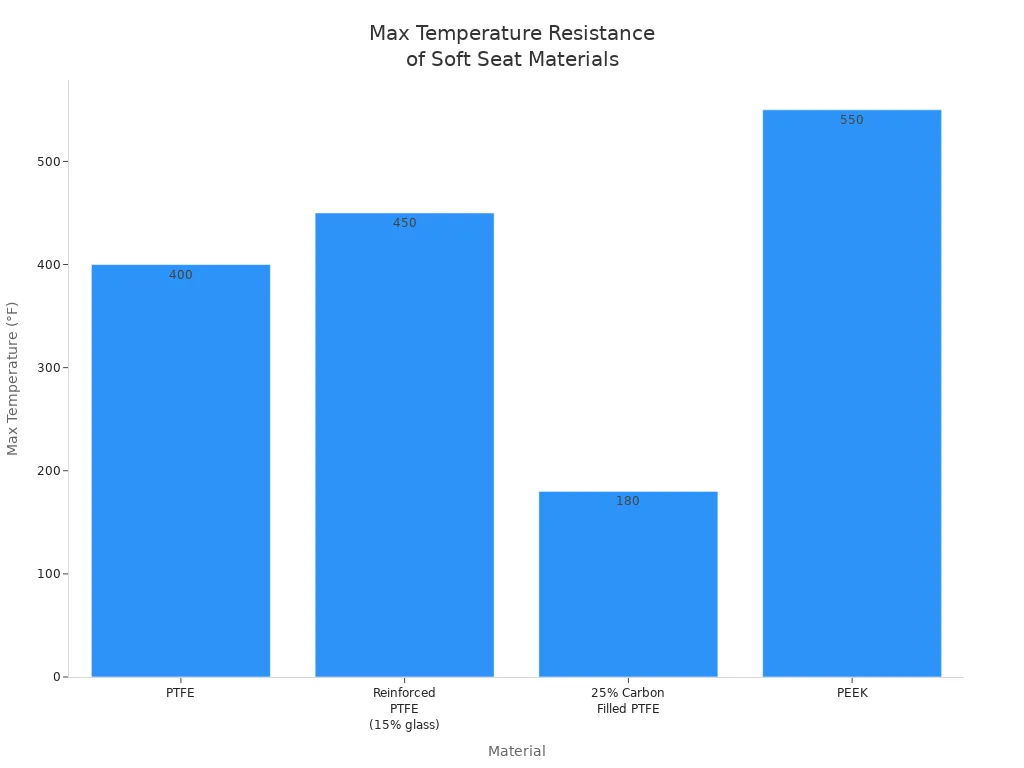
Here is a table that shows how these materials handle heat and chemicals:
|
Material |
Temperature Range |
Chemical Resistance |
|---|---|---|
|
PTFE |
-50°F to 400°F |
Almost all chemicals |
|
RPTFE |
-50°F to 450°F |
Similar to PTFE, better wear factor |
|
PEEK |
-70°F to 550°F |
Best for high pressure and temperature |
Advantages of Soft Seated Ball Valves
There are many good things about soft seated ball valves. These valves stop leaks very well. They work best with clean fluids and low pressure. Soft seated valves are simple to fix and cost less than metal seated ones.
Tip: Pick a soft seat ball valve if you need no leaks for water, gas, or chemicals.
Limitations of Soft Seated Ball Valves
Soft seated valves are not good for very hot places or rough fluids. The seats can change shape if used in hard jobs. Do not use these valves for steam, slurries, or dirty fluids.
Best Uses for Soft Seated Ball Valves
Use a soft seated ball valve in clean water pipes, food plants, and chemical factories. These valves are great for pipes that need no leaks and little fixing. You can trust TANGGONG VALVE to give you good soft seated ball valves for clean fluids.
Metal Seated Ball Valve Overview
Materials and Construction
A metal seated ball valve is made with strong materials. Both the seat and the ball are metal. TANGGONG VALVE uses stainless steel, carbon steel, Inconel, and Monel for the body. The seats have special coatings like Tungsten Carbide, Chromium Carbide, Stellite, or Chrome Oxide. These coatings help the valve handle heat and wear. Tungsten Carbide is very hard, so it works well with rough fluids. Stellite does not rust and keeps its shape in high heat.
|
Body Material |
Coatings |
|---|---|
|
Stainless Steel |
Tungsten Carbide |
|
Carbon Steel |
Chromium Carbide |
|
Inconel |
Stellite |
|
Monel |
Chrome Oxide |
Advantages of Metal Seated Ball Valves
Metal seated ball valves have many good points. They work in very hot and rough places. These valves last longer than soft seated ones. You can use them for steam, slurries, and dirty fluids. The valve keeps working even with hot or rough fluids. You will not need to fix them often and leaks are rare.
-
Tungsten Carbide: Good for rough fluids.
-
Chromium Carbide: Works in high heat.
-
Stellite: Stops rust and wear.
Note: Pick a metal seated ball valve for tough jobs.
Limitations of Metal Seated Ball Valves
Metal seated ball valves can have some problems. The seat can get damaged by rough bits or too much heat. The ball might get stuck if dirt gets inside. The body can rust if it touches sour gas or lots of chlorides. High heat can cause leaks inside the valve.
|
Failure Mode |
Root Cause |
Symptom |
Mitigation Strategies |
|---|---|---|---|
|
Seat Damage |
Rough bits, wrong chemicals, too much heat |
More leaks, harder to turn |
Use a strainer; pick the right seat material |
|
Ball Jamming |
Dirt, rust inside, parts not lined up |
Ball stuck, hard to turn |
Clean the pipe; use full-port valves |
|
Body Corrosion |
Lots of chlorides, sour gas |
Small holes, thin walls |
Use better metals; add coatings; use inhibitors |
|
Creep |
Too much heat |
Leaks inside |
Use steels that resist creep |
Best Uses for Metal Seated Ball Valves
Use a metal seated ball valve in power plants, oil and gas pipes, and chemical factories. These valves are best for high heat, rough fluids, or dirty liquids. TANGGONG VALVE makes metal seated ball valves that last long and meet strict rules.
Choosing the Right Ball Valve for Your Application
Temperature and Pressure Considerations
You need to pick a ball valve that matches your system’s temperature and pressure. Soft seated ball valves work best when things are not too hot or under too much pressure. They can handle temperatures from -50°F up to 450°F. If your system stays under 450°F and does not have high pressure, a soft seat is a good pick. Metal seated ball valves are made for very hot or tough places. They can work from -320°F to over 1000°F. These valves also do well with high pressure and do not lose strength.
|
Valve Type |
Temperature Range |
Pressure Range |
|---|---|---|
|
Soft Seat Ball Valve |
-50°F to 450°F |
Limited by soft seat material |
|
Metal Seat Ball Valve |
-320°F to 1000°F |
Greater pressure tolerance |
-
Soft seated ball valves might break if it gets too hot or the pressure jumps.
-
Metal seated ball valves are made for hard jobs and high pressure.
Tip: If your system gets very hot or has heavy pressure, use a metal seated ball valve. It will work better and last longer.
Fluid Type and Media Compatibility
The kind of fluid in your system helps you choose the right ball valve. Soft seated ball valves give a tight seal and stop leaks with clean fluids. They work well with water, gas, and many chemicals. But they do not last long with dirty, rough, or thick fluids. Metal seated ball valves are better for tough jobs. They can handle sand, slurries, or strong chemicals. You can use them in power plants, oil and gas, or chemical factories.
|
Valve Type |
Suitable Applications |
Limitations |
|---|---|---|
|
Soft Seated |
Chemical compatibility, tight seals |
Not for dirty or abrasive fluids |
|
Metal Seated |
High-temp, severe service, abrasive fluids |
May not provide the tightest seal always |
-
Soft seated ball valves are best for clean, smooth fluids.
-
Metal seated ball valves work with rough, scratchy, or hot fluids.
Note: Always check if the seat and body materials work with your fluid. This helps stop leaks or damage.
Durability and Maintenance
You want a ball valve that lasts a long time and is easy to take care of. Soft seated ball valves need some care. If your fluid is clean, they last longer. You may need to change the seat if you see leaks or damage. Metal seated ball valves have harder parts. They do not wear out fast and last longer, even in hard jobs. You might need to smooth or change the seat, but not as often.
|
Parameter |
Soft-Seated |
Metal-Seated |
|---|---|---|
|
Repair method |
Seat replacement |
Lapping or seat replacement |
|
Repair frequency |
Moderate (fluid dependent) |
Lower (harder surfaces last longer) |
-
Clean fluids help soft seated ball valves last more years.
-
Metal seated ball valves work better and last longer in tough places.
Checking and cleaning your ball valves often helps them work well and last longer.
Cost and Budget Factors
You need to think about both price and how well the valve works. Soft seated ball valves usually cost less at first. They seal well and do not leak much with clean, low-pressure fluids. Metal seated ball valves cost more, but they last longer in hard jobs. You save money over time because you do not need to change them as much. Think about what your system needs and how often you want to do repairs.
|
Condition |
Selection |
|---|---|
|
Temp < 450°F, clean fluids |
Soft seated ball valve (tight seal, lower cost) |
|
Temp > 450°F, abrasive media |
Metal seated ball valve (durability, reliability) |
-
If you do not have much money and use clean fluids, soft seated ball valves are a good choice.
-
For high pressure, high heat, or rough fluids, pick metal seated ball valves for better results.
If you are not sure, TANGGONG VALVE can help you. Their team will help you pick the right ball valve for your job. They look at your fluid, temperature, pressure, and what you need the valve to do. You can trust their ball valves for both easy and tough jobs.
How TANGGONG VALVE Supports Your Selection
TANGGONG VALVE gives you expert help when you need to pick a ball valve. Their engineers:
-
Find out what kind of fluid you have (gas, liquid, or slurry).
-
Suggest the best body and seat materials for your system.
-
Check what pressure and temperature your system needs.
-
Tell you if you need a manual or automatic valve.
-
Make sure your valve meets ISO or API safety rules.
You also get tips for taking care of your valve:
-
Look for leaks or worn-out seals.
-
Keep the valve clean and put oil on moving parts.
-
Test if the valve holds pressure.
-
Change broken parts fast.
With TANGGONG VALVE, you get valves that work well, last a long time, and support for every part of your project.
Application Scenarios for TANGGONG VALVE Ball Valve Series
When to Use Soft Seated Ball Valves
Soft seated ball valves are good for clean fluids. They make a tight seal and stop leaks. These valves are used where cleanliness is important. You see them in water treatment and food factories. They are also used in medicine pipelines. Soft seats keep your system safe from germs and leaks.
|
Application Area |
Description |
|---|---|
|
Water supply and treatment networks |
Controls flow and stops leaks in clean water |
|
Pharmaceutical pipelines |
Handles clean media with very low leakage |
|
Food processing pipelines |
Keeps systems hygienic and prevents contamination |
Tip: Pick soft seated ball valves for clean jobs. They work best at low temperatures and give the tightest seal.
When to Use Metal Seated Ball Valves
Metal seated ball valves are made for tough jobs. They can handle high heat and rough fluids. These valves work well with strong pressure. You find them in power plants and oil fields. They are also used in chemical factories. Metal seats last longer and resist damage from steam and slurries. They work well when your system turns on and off a lot.
-
Superheated steam and hot oil systems
-
Slurry handling with solid particles
-
High-pressure gas service with frequent cycling
Note: Metal seated ball valves are strong in harsh places. They need less fixing and last longer.
Industry Examples
TANGGONG VALVE ball valves are used in many industries. You see them in power plants and oil and gas jobs. They are also used in chemical factories. In power plants, they control fuel and cooling water. In oil and gas, they help shut off pipes fast. Chemical plants use them to handle strong chemicals safely.
|
Industry |
Applications |
|---|---|
|
Power Generation |
Fuel lines, cooling water, utility services |
|
Oil & Gas |
Isolation, pigging, emergency shut-off, pipelines |
|
Chemical Processing |
Handles chemicals with corrosion-resistant tight sealing |
TANGGONG VALVE follows strict rules like ISO9001:2015, CE, TUV, SGS, API 6D, and API 607. You can trust their valves to be safe and high quality for every job.
Pick the right valve for your job. The table below can help you decide:
|
Feature |
Soft Seated Ball Valve |
Metal Seated Ball Valve |
|---|---|---|
|
Sealing |
No leaks |
Good seal, some leaks |
|
Durability |
Lasts a while |
Lasts a long time |
If you need help, you can:
-
Ask for proof the valve is good.
-
Look at test results.
-
See how much the seller knows.
TANGGONG VALVE gives you strong and trustworthy valves.
FAQ
What is the main difference between soft seated and metal seated ball valves?
Soft seats give a tighter seal. Metal seats work with hotter and rougher fluids. Pick the one that fits your system best.
How do you select the right ball valve for your application?
You look at what fluid you use. You check how hot or how much pressure there is. TANGGONG VALVE engineers help you find the right valve for your needs.
Can TANGGONG VALVE supply ball valves for extreme conditions?
Yes. You can get ball valves for very cold, high-pressure, or hot jobs. TANGGONG VALVE makes special valves for tough places.