



You need clean valves for food and medicine safety.
The right sanitary butterfly valve stops product contamination.
It also follows strict health laws.
Plus, it survives tough cleaning cycles easily.
World demand for hygienic processing grows every year.
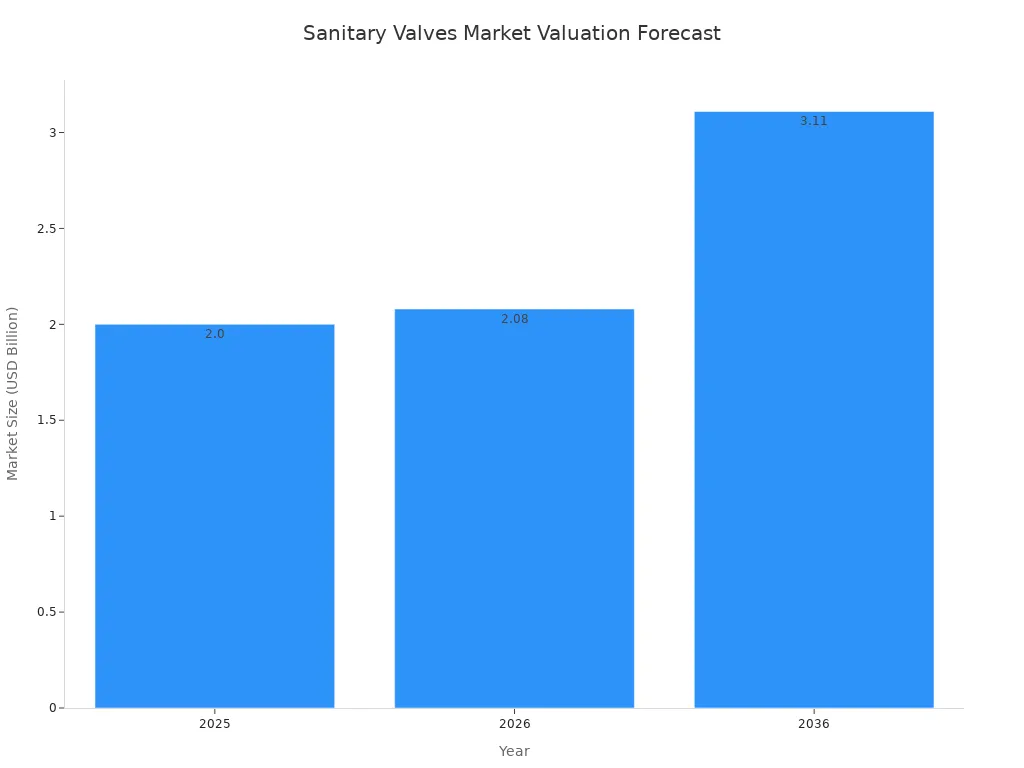
Choosing reliable butterfly components protects your entire fluid system.
This helps demanding medicine production lines stay safe.
Key Takeaways
-
Pick shiny smooth finishes (Ra ≤ 0.4 μm).
-
This stops bacteria growth.
-
It makes cleaning easier.
-
Choose the correct end connection.
-
Pick Tri-Clamp for fast checks.
-
Choose Butt-Weld for high-pressure lines.
-
Use 316L stainless steel.
-
Use chemical-resistant seats too.
-
This stops rust from forming.
-
It handles tough wash cycles well.
-
Match your valve size properly.
-
Match the pressure rating correctly.
-
Match seal materials to fluids.
-
This keeps operations very safe.
Sanitary Butterfly Valve Standards and Design Criteria
Clean liquid processing needs pure safety.
You must guard pipes from bacteria.
You must stop product buildup.
The right sanitary butterfly valve protects batch safety.
Surface Finish and Hygienic Safety
Smooth metal walls block bad bacteria.
Regular valves have tiny scratches.
These small spots trap product residues.
They also cause biofilm growth.
Hygienic processing needs Ra ≤ 0.4 μm roughness.
|
Feature |
Mechanical Polishing |
Electropolishing |
|---|---|---|
|
Mechanism |
Scrapes metal with rough materials |
Cleans metal using electrical power |
|
Surface Finish Impact |
Removes big bumps but leaves tiny scratches |
Cuts surface roughness in half for mirror shines |
|
Corrosion Resistance |
Might harm protective metal layers |
Builds a rust-resistant chromium layer |
Electropolishing clears away trapped iron bits.
This creates smooth, crack-free shapes.
Liquid flows easily without traps.
Self-draining parts empty fluid completely.
This helps quick system cleaning.
Compliance with 3-A, EHEDG, and FDA
Strict safety rules guide food gear.
Sanitary valves must meet 3-A rules.
They must follow EHEDG guidelines too.
ASME BPE rules control medicine systems.
Key Compliance Pillars:
- 3-A & EHEDG: Clean design and easy washing
- FDA 21 CFR 177.2600: Safe rubber parts and seals
- ASME BPE: High-purity rules for drug production
Soft seals touch your product directly.
FDA 21 CFR 177.2600 lists safe rubber materials.
Allowed types are EPDM, Silicone, and PTFE.
These tough seats handle strong steam.
They handle harsh wash chemicals too.
Modern drug factories use approved parts.
They keep process lines pure.
Approved valves make cleaning simple.
They help CIP and SIP cycles.
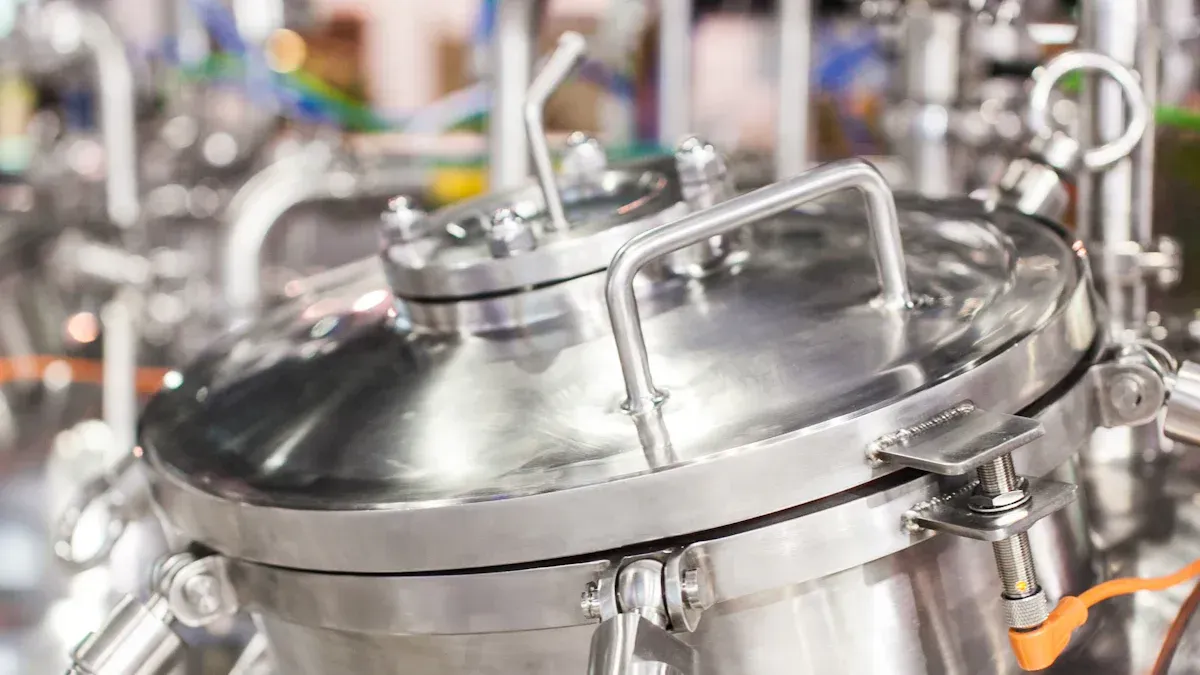
Sanitary Butterfly Valve Connection Options
Pick good pipe ends for safe flows.
Proper fittings stop bad fluid leaks.
They help speed up routine care.
Engineers pick connections by line pressure.
They check heat levels too.
They review cleaning schedules as well.
|
Connection Type |
Mechanism & Characteristics |
Suitable Applications |
|---|---|---|
|
Tri-Clamp |
Clamps metal rings for fast disassembly |
Food lines needing constant checks |
|
Butt-Weld |
Welds to pipes for permanent seals |
Deep, high-heat, high-pressure setups |
|
Threaded / Flanged |
Bolts metal flanges for heavy support |
Large steam lines and utility pipes |
Tri-Clamp End Connections
Tri-clamp ends build fast pipe joints.
You open them without special tools.
Workers pull the valve fast.
This helps speed up regular checks.
These quick clamps suit low-pressure lines.
They work in dairy plants well.
They help clean drug setups too.
The clamp squeezes a seal tight.
This blocks space for bad bugs.
You protect liquid batches easily now.
Butt-Weld Ends for Hygienic Piping
Butt-weld ends form direct pipe joints.
You weld valves to steel pipes.
This style cuts out inside gaps.
It clears away small seal cracks.
High-pressure lines use direct welded joints.
They handle tough chemicals safely now.
They stand up to high heat.
These welded joints need no gaskets.
You reduce long repairs in deep spots.
Threaded and Flanged Sanitary Connections
Threaded and flanged joints serve utility lines.
Threaded types turn onto small pipes.
You use them in cool water.
Flanged designs use heavy steel bolts.
They offer strong pipe support daily.
They fit medium and large pipes.
These sanitary butterfly valve parts handle steam.
They hold tough acid transfer lines.
You match connections to your layout.
Material Selection for Sanitary Butterfly Valve Bodies and Seals
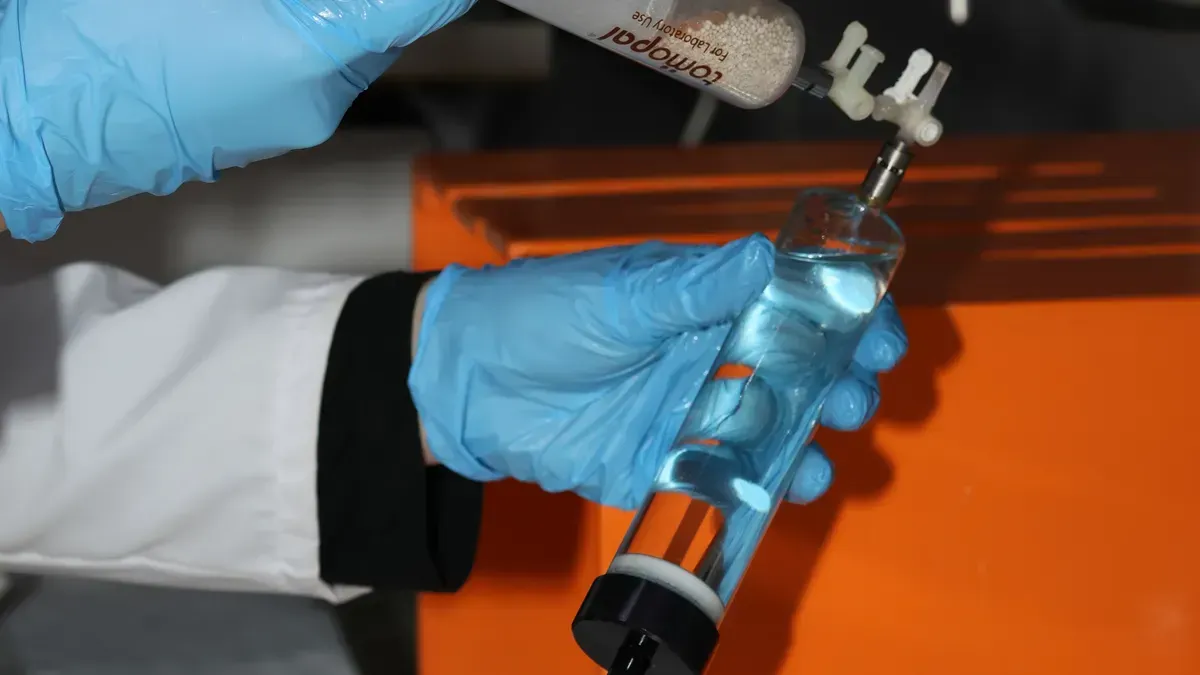
Pick strong materials for your lines.
Good metals keep fluids pure.
They stop early wear in plants.
Stainless Steel 304 vs 316L Valve Bodies
Makers build bodies with safe steel.
304 steel works for water lines.
316L steel contains added molybdenum.
This extra bit stops rust better.
It fights strong salts and acids.
|
Stainless Steel Grade |
Chromium (Cr) |
Nickel (Ni) |
Molybdenum (Mo) |
Carbon (C) |
Typical PREN Range |
|---|---|---|---|---|---|
|
304 |
18% – 20% |
8% – 11% |
None |
Max 0.08% |
18.0 – 20.0 |
|
316L |
16% – 18% |
10% – 14% |
2% – 3% |
Max 0.03% |
22.6 – 27.9 |
The PREN score measures metal strength.
It tests resistance to small holes.
316L steel gets higher scores.
Engineers pick 316L for clean jobs.
Gasket Materials: EPDM, Silicone, FKM, and PTFE
Your sanitary butterfly valve needs soft seals.
These flexible seals stop liquid leaks.
Media types need specific seal materials.
Process heat levels matter too.
|
Gasket Material |
Temperature Limits |
Compatible Media |
Key Limitations |
|---|---|---|---|
|
EPDM |
-67°F to 300°F (-55°C to 150°C) |
Water, steam, mild acids, CIP solutions |
Degrades quickly in oils and animal fats |
|
Silicone |
-120°F to 600°F (-82°C to 315°C) |
Air, oxygen, inert fluids, low-pressure steam |
Swells easily in concentrated oils and solvents |
|
FKM |
-30°F to 437°F (-34°C to 225°C) |
Mineral oils, fuels, aggressive chemicals |
Shows poor resistance to hot water and steam |
|
PTFE |
-450°F to 580°F (-268°C to 304°C) |
Almost all chemical processing media |
Subject to cold flow under heavy mechanical loads |
Wrong seals swell up fast.
They also cause bad line leaks.
TANGGONG VALVE tests every seat.
They test every butterfly disc too.
This tough test stops fluid leaks.
It helps parts last longer.
Actuation and TANGGONG VALVE Automation Options
Smart valve control helps regulate flow.
It keeps plant lines safe.
It makes operations efficient too.
You pick manual handles.
You choose full auto control.
Manual Operation Levers and Handles
Manual handles give workers easy flow control.
You move handles across fixed notches.
This sets liquid speed fast.
Standard manual levers use basic locks:
-
Multi-Position Trigger Handles: Pull handles to shift discs fast.
-
Detent Mechanisms: Fixed notches hold discs every 15 degrees.
-
Gear Handwheels: Heavy gears offer fine disc turns.
These options stop bad disc shifts.
Pneumatic and Electric Actuation Systems
Modern plants use powered actuation options.
Actuators turn discs without manual force.
Auto systems cut labor costs.
They boost plant accuracy too.
Automated factories choose key control items:
-
Pneumatic Linear Actuators: Steel linear units fit all sizes.
-
Quarter-Turn Actuators: Rack units and electric drives turn fast.
-
Monitoring & Control Units: Switch packs report disc locations.
Standard auto setups use steel canisters.
These units open valves smoothly.
TANGGONG VALVE Control Units and Positioners
TANGGONG VALVE sells smart control tops.
You mount units above air cylinders.
Sensors track real-time disc positions.
LED lights show open statuses.
Smart positioners take digital signals.
They protect pipes from water hammer.
They also save plant energy.
You connect control tops to networks.
AS-Interface or DeviceNet work well.
Auto upgrades fix process lines.
How to Choose the Right Sanitary Butterfly Valve
You need a clear plan.
This helps you pick the right valve.
It keeps your factory line safe.
Evaluating Fluid Properties and CIP/SIP Conditions
First, check your liquid types.
Look at working heat levels too.
Food and drug liquids need heat stability.
Harsh washing chemicals ruin cheap seals.
These strong acids cause seal wear.
|
Operating Stressor |
Impact on Seal Materials |
Required Material Characteristics |
Recommended Material Options |
|---|---|---|---|
|
Thermal Fluctuations |
Dimensional instability and thermal expansion |
High thermal stability and low moisture absorption |
PTFE, UHMW-PE |
|
Aggressive CIP Chemicals |
Material degradation, softening, and cracking |
Chemical inertness and low reactivity |
PTFE, UHMW-PE |
Tip: Heat spikes hurt seal flexibility.
They can cause bad chemical leaks.
Always pick tough rubber parts.
This keeps your pipes fully safe.
Matching Pressure Ratings and Flow Rates
Next, review your line pressure.
Check your pipe sizes too.
Review your total flow speed.
You must match disc shapes correctly.
This matches your true liquid speed.
Good sizing stops deep pressure drops.
It keeps daily operations working well.
A Complete Buying Guide for Process Engineers
Follow these easy steps now:
-
Define Fluid & Temperature: Note your liquids, heat levels, and pressures.
-
Select Compatible Seals: Pick tough seats that resist harsh chemicals.
-
Determine Sizing & Connections: Choose clamp or weld ends for pipes.
-
Choose Actuation: Add manual levers or smart auto heads.
This simple guide uses key rules.
TANGGONG VALVE builds many clean components.
Their parts fit pure processing setups.
They hold major safety certifications today.
These include ISO 9001:2015, CE, TUV, and API 609.
Their custom factory parts support plants.
Choosing the right sanitary butterfly valve takes work.
You must check metal types carefully.
You must check rubber parts too.
Look at surface finishes right now.
Review motor options for your lines.
Work with trusted makers like TANGGONG VALVE.
This helps follow all world safety rules.
Smart picks stop bad plant delays.
💡 Ready to upgrade your system? Talk with our valve experts today. Ask for custom details for your lines!
FAQ
How often should you replace sanitary valve seats?
Check soft seats during routine plant care.
Hot heat accelerates seat wear. Strong wash liquids ruin parts too. Swap bad seats right away. Watch for tiny cracks or leaks. Quick fixes stop batch spills. They keep lines running well.
Can you use a butterfly valve for flow throttling?
Yes, you can control liquid speeds easily. Use multi-position levers or digital positioners. Center disc shapes handle light throttling well. Yet, partial openings drop line pressure. Fast flows also speed seal wear.
Why do hygienic lines require 316L stainless steel?
Grade 316L steel includes added molybdenum. This metal fights rust from harsh chemicals. It stops damage from acidic food items. Low carbon stops welding damage too. Smooth surfaces block bad bacterial growth.
What is the main benefit of Tri-Clamp connections?
Tri-Clamp pipe connections give helpful benefits:
-
Quick tool-free disassembly for routine checks
-
Simple manual washing access
-
Gap-free internal seals to block bacteria
The squeezed seal blocks bad fluid leaks.