



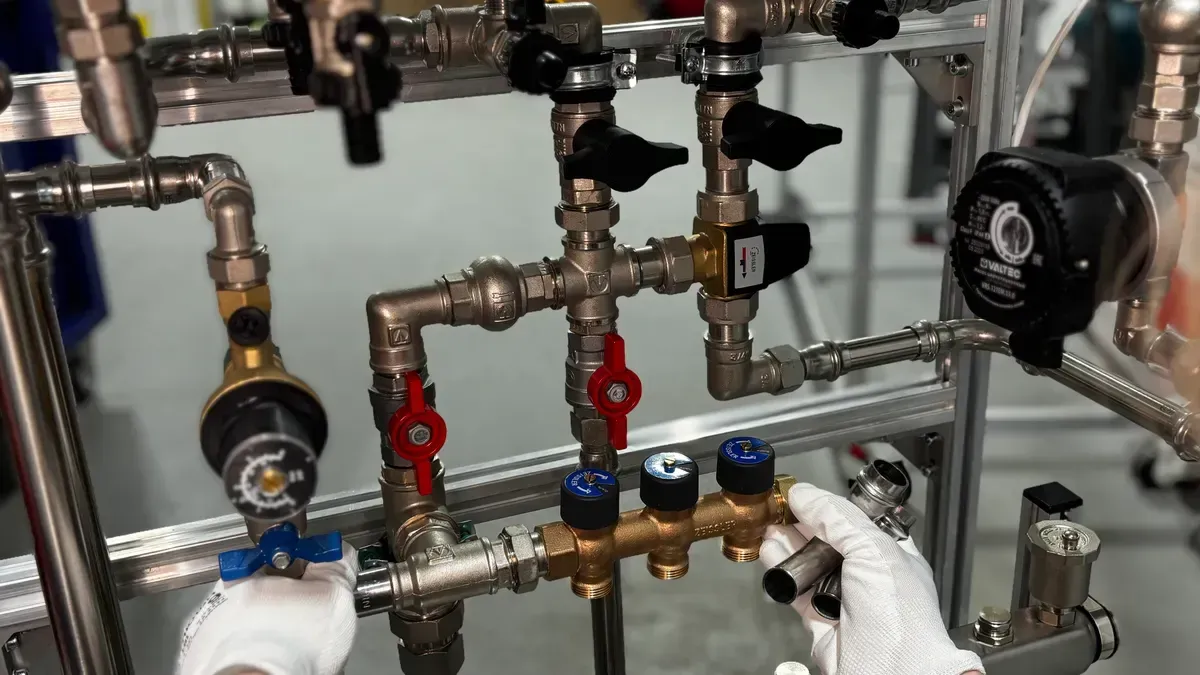
A three way ball valve lets you control fluid direction. It has three ports. You can switch flow between pipelines. You can also mix two streams together. This valve is special. It can do diverting and mixing jobs. Other valves cannot do these jobs.
If you know how the ball, ports, and seals work, you can see why the flow changes when you turn the handle.
|
Feature/Aspect |
Description |
|---|---|
|
Flow Configurations |
Moves flow between three ports for mixing or diverting. |
|
L-port Design |
Sends fluid from one inlet to one of two outlets. |
|
T-port Design |
Mixes two flows or sends flow to two outlets. |
|
Core Components |
Body, stem, sealing parts, thread connections, handle or actuator. |
|
Number of Seats |
Two or four seats change how the valve works and where you use it. |
Key Takeaways
-
A three-way ball valve moves fluid in three ways. It can mix or change the flow.
-
You can pick L-port or T-port designs. L-port is good for switching. T-port is good for mixing.
-
You should check the valve every six months. Look for leaks and damage. This helps the valve work well.
-
Automated valves give better control and save time. Manual valves cost less and are good for easy jobs.
-
Pick the right materials for your valve. Think about the fluid and how it will be used. This stops leaks and keeps things safe.
Three Way Ball Valve Basics
What Is a Three-Way Valve?
A three-way valve gives you more control over your piping system than a standard valve. You can use it to connect three different pipelines. This type of valve lets you mix two flows together or send one flow to two different places. You often see three-way valves in industries like oil and gas, water treatment, and chemical plants.
When you look at a three-way valve, you will notice three ports. Each port can act as an inlet or an outlet. The special design of the valve body and the ball inside allows you to change the direction of the flow. You can use a handle or an actuator to turn the ball and select the flow path you want.
TANGGONG VALVE stands out as a top manufacturer of three-way valves. Their ball valve series offers reliable solutions for many industries. You can trust their products for quality and performance.
Here is a simple table to help you understand the main types of three-way valves:
|
Type |
Description |
Functionality |
|---|---|---|
|
T-Port |
A valve with a T-shaped bore allowing flow between all three ports. |
Used for mixing fluids and can direct flow between two ports while blocking the third. |
|
L-Port |
A valve with an L-shaped bore allowing flow between two ports at a time. |
Used for diverting flow and can completely shut off flow to one port while directing to another. |
Tip: When you choose a three-way valve, always check if you need a T-port or L-port design. Each type controls the flow in a different way.
How a 3-Way Ball Valve Works
You might wonder how a three-way ball valve manages to change the flow so easily. The answer lies in the ball inside the valve. This ball has a hole drilled through it in either a T or L shape. When you turn the handle, you rotate the ball. The position of the ball lines up the holes with the ports. This action lets you control which pipelines connect and which ones stay blocked.
A three-way ball valve works by rotating the ball to connect different ports. If you use a T-port, you can mix two flows or send one flow to two outlets. If you use an L-port, you can divert flow from one inlet to one of two outlets. You can also shut off one port completely. The design makes it easy to switch between mixing and diverting functions.
You will find that TANGGONG VALVE’s ball valve series uses high-quality materials and precise engineering. Their three-way valves offer smooth operation and tight sealing. You can choose manual or automated options, depending on your needs. These valves help you manage complex flow paths with just a simple turn.
A three-way valve gives you flexibility. You can use it to solve many flow control problems in your system. With the right three-way ball valve, you can make your process safer and more efficient.
Main Components and Flow Paths
Ball, Ports, and Seals
To understand how 3-way ball valves work, you need to know their main parts. The ball sits inside the valve body. It has a special hole in it. The ports are where fluid goes in and out. Seals keep the valve tight and stop leaks.
Here is a table that lists what each part is made of and why it matters:
|
Component |
Primary Materials |
Key Characteristics |
|---|---|---|
|
Ball |
Chrome-Plated Steel, Chrome-Plated Brass, Stainless Steel, PVC |
Durable, corrosion-resistant, smooth surface for fluid control; stainless steel preferred for harsh environments |
|
Ports (Housing) |
Stainless Steel, Brass, PVC, Bronze, Cast Iron |
Must withstand corrosion, mechanical stress, temperature; stainless steel common in demanding industries |
|
Seals |
NBR (Nitrile Rubber), FKM (Viton), EPDM |
Leak-tight, resistant to chemicals, temperature, wear; FKM used for high heat and aggressive chemicals |
TANGGONG VALVE uses strong stainless steel and good sealing materials in their three-way valves. This helps the valves last a long time and stay safe, even in tough places.
Seals are very important for how a three-way valve works. You can see the differences in seal materials in the table below:
|
Seal Material |
Characteristics |
Advantages |
Limitations |
|---|---|---|---|
|
NBR (Nitrile Rubber) |
Excellent resistance to oils, fuels, and hydraulic fluids. |
Affordable and effective for oil-based applications. |
Poor resistance to ozone, weathering, and certain chemicals. |
|
FKM (Viton) |
High resistance to heat, chemicals, and environmental factors. |
Excellent performance at high temperatures and with aggressive chemicals. |
Higher cost compared to other elastomers. |
|
EPDM |
Outstanding resistance to water, steam, and ozone. |
Reliable in hot water and steam environments. |
Limited resistance to oils and fuels. |
|
PTFE (Teflon) |
Exceptional chemical resistance, non-stick properties, and high temperature tolerance. |
Non-reactive and highly durable. |
Higher cost and limited elasticity. |
When you pick a three-way valve, match the seal material to your fluid and temperature needs. This helps stop leaks and keeps your system working well.
L-Port vs T-Port Flow
There are two main types of three-way valves: L-port and T-port. The difference is the shape of the hole in the ball. The L-port connects one inlet to one of two outlets. You use it to switch flow between two pipelines. The T-port can connect all three ports at once. You use it to mix two flows or send one flow to two places.
The L-port is best for simple switching jobs. For example, you can fill Tank 1 or Tank 2, but not both at the same time. You can also bypass equipment during repairs or block one outlet. The table below shows common uses for L-port three-way valves:
|
Application |
Description |
|---|---|
|
Switching flow between two tanks |
Fill either Tank 1 or Tank 2, but not both at the same time. |
|
Bypassing equipment |
Direct flow around a filter, heat exchanger, or pump during maintenance. |
|
Seasonal flow redirection |
Divert fluid to a heater in winter or a cooler in summer. |
|
Dead-end service |
Block one outlet entirely while using the other. |
The T-port gives you more ways to control flow. You can mix two streams or split one stream into two. This makes the T-port good for more complex systems.
Tip: Always check what your process needs before picking an L-port or T-port valve. Picking the wrong one can make flow control harder.
Flow Direction Control
You control flow in a three-way valve by turning the handle or actuator. The ball inside turns and lines up with different ports. This changes the path the fluid takes. Here is how a 3-way ball valve works:
-
Turn the handle.
-
The ball turns inside the valve.
-
The hole in the ball matches up with the ports.
-
The flow path changes based on the ball’s position.
The ball inside keeps flow paths separate. This stops fluids from mixing when you do not want them to. It also gives you better control, which is important for automated systems.
-
The L-port valve sends flow between one inlet and two outlets.
-
The T-port valve lets you mix or divert flow, changing where it goes.
-
If you install the valve wrong, you might get the wrong flow direction.
TANGGONG VALVE’s ball valves use smart engineering for good flow control. Their three-way valves work smoothly and shut tightly. You can trust these valves for important jobs in oil, gas, chemical, and water systems.
Three-way valves need less care than many other valves. The simple design means fewer moving parts and less damage. You get reliable use and save money over time.
To avoid problems, watch for things like seat wear, stem seal leaks, and rust. TANGGONG VALVE uses strong materials and careful design to help stop these problems. This means your valve lasts longer and works better.
Note: Always follow the maker’s instructions for putting in and taking care of your valve. This helps you get the best use from your three-way valve.
Operation Methods
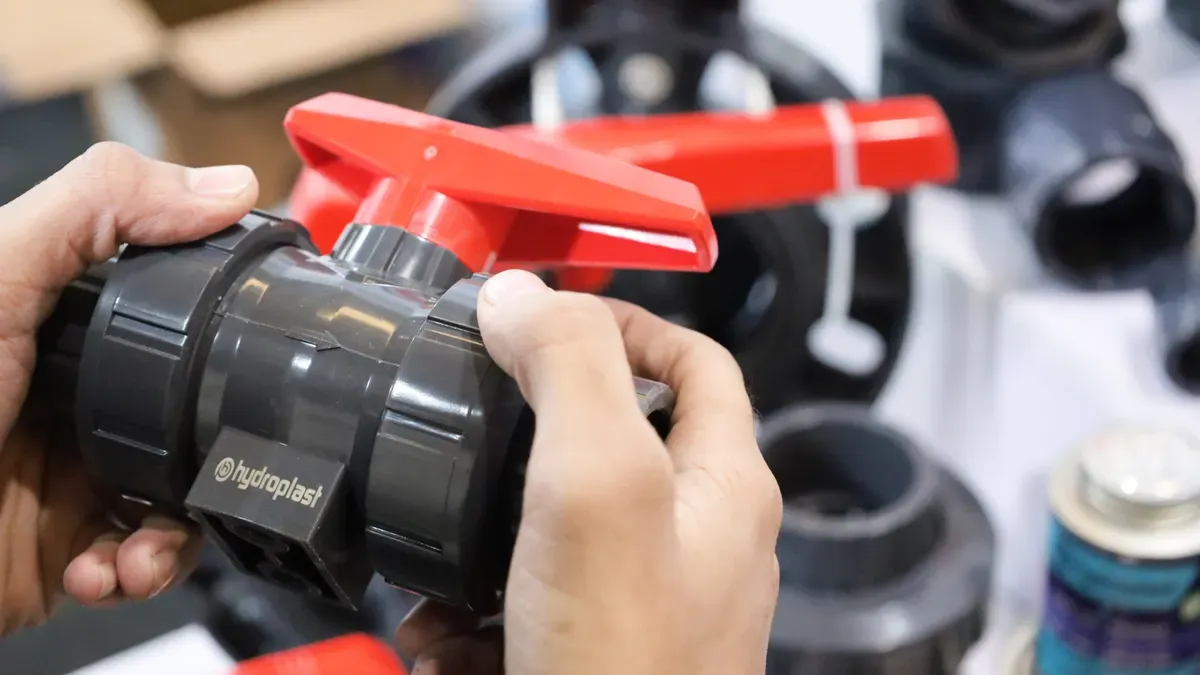
Manual vs Automated Three-Way Valve
You can use a three-way valve by hand or with machines. Manual valves have a handle or lever. You turn the handle to change where the fluid goes. This works well for simple setups. It is good if you do not need to switch flow often. Manual valves cost less and are easy to use. But they can be slow and not very exact. You must be there to make changes.
Automated valves use actuators to move the ball inside. You can control these valves from far away. Automation is helpful for quick or frequent changes. It also gives you better accuracy. Big plants and complex systems use automated valves to save time and avoid mistakes.
TANGGONG VALVE has both manual and automated three-way valves. You can pick what works best for your system.
Actuation Options for 3-Way Ball Valves
There are different ways to automate a three-way valve. Each method has its own benefits. Here are the most common choices:
-
Pneumatic actuators use air. They work quickly and are dependable. Many factories use them for fast switching.
-
Electric actuators use electricity. They give you exact control and work with digital systems. You can track energy and set them for better use.
-
Hydraulic actuators use fluid power. They give strong force for tough jobs.
|
Actuation Type |
Key Features |
Best Applications |
|---|---|---|
|
Pneumatic |
Fast cycling, spring-return fail-safe |
Plant automation, process skids, shutdown systems |
|
Electric |
Slower operation, integrates easily with electrical control |
Remote pipelines, water systems, building services |
|
Hydraulic |
High torque, handles tough jobs |
Heavy industry, large valves |
Automated valves help you save energy. They let fluid move smoothly and do not block flow much. This cuts down on turbulence and energy loss.
Pros and Cons
Think about the good and bad points before picking manual or automated valves. The table below shows the main ideas:
|
Operation Type |
Pros |
Cons |
|---|---|---|
|
Manual |
Simple, Cost-effective |
Labor-intensive, Less precise |
|
Automated |
Precise, Easy to use |
More expensive, Requires power source |
Manual valves are simple and cost less. Automated valves give better control and save time, but they need power and cost more. If you need to change flow often or from far away, automation is best. If your system is small or changes are rare, manual valves may be better.
Tip: Always pick the operation method that fits your process. This keeps your flow safe, efficient, and reliable.
Applications and Selection
Where to Use a Three Way Ball Valve
Three-way valves are used in many industries. They help control flow in systems that need mixing or switching. You see them in water treatment, chemical plants, oil and gas, and HVAC systems. These valves can send flow between tanks or mix fluids. They can also shut off one line while keeping another open.
Here is a table with common uses for each type:
|
Type of Valve |
Applications |
|---|---|
|
L-port |
Diverter valves, shutoff valves, bypass valves, selecting valves, divert flow between tanks |
|
T-port |
Mixing valves, sample valves, purging valves, combine or split flow, alternate flow sources |
A three-way valve gives you more choices. You can change flow paths fast. This helps your process work better and keeps it safer.
Choosing the Right Valve
When picking a three-way valve, think about a few things:
-
Media type: Is your fluid corrosive or under high pressure? Pick the right material for the valve body and seats.
-
Application conditions: Check temperature, pressure, and flow rate. Make sure the valve fits your system.
-
Valve function: Do you need to mix, divert, or switch flows? Choose a 3-way ball valve for your main job.
-
Maintenance: Some three-way valves are easy to clean. This saves time and money.
Also look at flow pattern, flow capacity, and your budget. Match each port to your system’s needs. Check the shut-off class. Decide if you want manual or automated operation. Set the fail-safe position if you use an actuator.
Tip: Always match the valve’s pressure rating and temperature range to your system. This keeps your process safe and reliable.
TANGGONG VALVE Ball Valve Series Advantages
TANGGONG VALVE’s ball valve series is well known. These valves work in high pressure and temperature. You can pick from many materials, even special alloys for tough jobs. The company’s engineering team helps with custom solutions for your needs.
|
Advantage |
Description |
|---|---|
|
Design for Extreme Conditions |
Handles high pressure and temperature easily |
|
Exotic Material Options |
Offers special materials for different industries |
|
Extensive Manufacturing |
Can make large or small orders |
|
Engineering Support |
Helps you design the right three-way valve for your job |
You can trust TANGGONG VALVE for good performance and long life. Their three-way valves help you control flow, improve safety, and cut downtime.
You now know that a three-way ball valve gives you flexible flow control. You can mix, divert, or split fluids using L-port or T-port designs. Always check your system’s pressure, temperature, and flow needs before choosing a valve. Understanding flow paths and operation types helps you avoid mistakes and keeps your process safe.
-
Review port diagrams and valve labels from the manufacturer.
-
Match materials and size to your fluid and system.
-
For more details, sketch your flow path and consult experts if you have questions.
FAQ
What is the difference between an L-port and a T-port three-way ball valve?
You use an L-port valve to switch flow between two outlets. You use a T-port valve to mix or split flows. Always check your process needs before choosing.
Can you automate a three-way ball valve?
Yes, you can add electric, pneumatic, or hydraulic actuators. Automation lets you control the valve from a distance and improves accuracy.
How do you know which port is which?
Look for markings or labels on the valve body. Manufacturers like TANGGONG VALVE provide diagrams. Always check the manual before installation.
What materials work best for chemical applications?
Stainless steel and PTFE (Teflon) seats resist corrosion. You should match the valve material to your chemical and temperature needs.
How often should you maintain a three-way ball valve?
Check the valve every six months. Inspect for leaks, worn seals, or buildup. Regular maintenance keeps your system safe and reliable.