



You use a 3 way ball valve to change where fluid goes in pipes. This valve helps you mix, move, or stop flow in many factories. Chemical plants use it to mix chemicals. Water treatment places use it to control how much water moves. Oil and gas sites use the valve to keep things safe and stop flow fast if needed. Food and drink factories use it to mix ingredients.
|
Industry |
Application Description |
|---|---|
|
Chemical Processing |
Mixing, moving, and testing chemicals |
|
Water and Wastewater |
Controlling flow and adding chemicals |
|
Food and Beverage |
Mixing ingredients and making batches |
|
Oil and Gas |
Fluid control and stopping flow in emergencies |
Key Takeaways
-
A 3-way ball valve moves fluid in different ways. It is important for places like chemical plants and water treatment.
-
Pick L-port or T-port designs for your job. L-port is good for simple changes in flow direction. T-port is used for mixing or splitting flows.
-
Use strong materials for the valve and seals. This helps the valve last longer and stops leaks. It is very important in tough places.
-
Automated 3-way ball valves let you control them from far away. They work faster and make big systems safer and better.
-
Keep the valve in good shape with regular care. Look for leaks, add oil to parts, and follow a schedule. This helps the valve work well for a long time.
What is a 3-way ball valve
Basic design and function
A 3-way ball valve helps control where fluid goes in pipes. This valve has three ports. These ports let you move liquids or gases in different directions. Inside, there is a ball with holes in it. When you turn the handle, the ball moves and connects different ports. This design lets you pick how the flow moves.
-
The 3-way ball valve can change flow between three ports by turning a ball with holes inside.
-
The way the ball is turned decides which ports are joined, so you get different flow paths.
-
The L-port design lets you send flow from one inlet to two outlets.
-
The T-port design can mix flow from two inlets into one outlet or send flow from one inlet to two outlets.
-
The T-port can also connect all three ports at the same time.
There are two main types: L-type and T-type. The L-type joins two pipes and changes flow direction. The T-type joins three pipes and can block one path, split, or mix flow. You can look at the table below to see how these designs compare:
|
Feature |
T-Type Ball Valve |
L-Type Ball Valve |
|---|---|---|
|
Connection |
Connects three pipelines and can block one channel |
Connects two pipes only |
|
Functionality |
Can split and mix flow |
Only sends flow to different places |
|
Usage |
More useful, can do what L-type does |
Used for changing flow direction |
Common uses in industry
You see the three-way ball valve in many industries. Water treatment plants use it to control disinfectant and send water to different steps. Food and drink factories use the valve to control how ingredients move and mix them together. Oil and gas sites use the 3-way ball valve to control fluids and send oil and gas to tanks or pipes. Emergency shutdown systems use the valve to close off parts of a pipeline for repairs or safety.
|
Industry |
Specific Purpose |
|---|---|
|
Water Treatment |
Controlling disinfectant and sending water to different steps. |
|
Food and Beverage |
Controlling ingredient flow and mixing ingredients in food making. |
|
Oil and Gas |
Controlling fluids in drilling rigs and sending oil and gas to tanks and pipes. |
|
Emergency Shutdown |
Closing off pipeline sections for repairs or emergencies. |
You need to pick a 3-way valve that follows industry rules. Certifications like ISO 9001 and ASTM show the ball valve is safe and works well. Many industries want certified valves to make sure they are good quality and do not break. These rules help you choose the right valve and keep your system working.
Tip: Always look for certifications when picking a three-way ball valve. Certified valves last longer and work better.
Main parts of a 3 way ball valve
Ball and ports
The ball and three ports are the most important parts. The ball sits inside and turns to control flow. When you turn the handle, the ball lines up with the ports. This lets fluid move in different ways. The materials for the ball and ports are important. Brass and stainless steel are used a lot. These materials make the valve strong and help it seal well. You can see how the materials change how the valve works in the table below:
|
Component |
Common Materials |
Performance Implications |
|---|---|---|
|
Ball and Ports |
Brass, Stainless Steel |
Durability and sealing capabilities are enhanced. |
|
Sealing System |
High-quality seats and O-rings |
Maximizes chemical compatibility and pressure resistance. |
Valve body and seals
The valve body holds all the parts together. It needs to be strong to work well. Carbon steel and stainless steel are good because they do not rust. They also work with tough fluids. The seals stop leaks and keep the valve safe. Seals are often made from NBR, EPDM, FKM, or PTFE. These seals work with many fluids and temperatures. If you use hot fluids, graphite seals help stop leaks. Hard-coated balls last longer with rough fluids. Here are some main points:
-
The material you pick helps stop rust and makes the valve last.
-
Good seals stop leaks and early problems.
-
The valve body matches the fluid and how it is used.
-
Seals for high heat keep the valve safe.
-
Hard-coated balls are better for rough fluids.
Tip: Always check what the seals and body are made of before you put in a 3-way valve. This helps stop leaks and keeps your system safe.
Handle or actuator
You use a handle or an actuator to control the valve. The handle lets you turn the ball by hand. This is good for small systems. If you need to control the valve from far away, use an actuator. Actuators can be pneumatic, hydraulic, or electric. They move the ball fast and let you control the valve without being close. The table below shows the main differences:
|
Feature |
Manual Handle Mechanism |
Automated Actuator Mechanism |
|---|---|---|
|
Control Method |
Operated by a handle or lever for manual control |
Uses pneumatic, hydraulic, or electric actuators for remote control |
|
Best Uses |
Ideal for smaller systems and non-critical applications |
Suitable for industrial applications requiring frequent adjustments |
|
Response Time |
Immediate control by the operator |
Quick response times for automated systems |
|
Cost |
Generally more cost-effective |
Higher initial investment but offers automation benefits |
|
Accessibility |
Requires direct access for operation |
Can be operated remotely, no direct access needed |
You choose the control method that fits your needs. Use a handle for quick changes and easy reach. For big or tricky systems, an actuator works better and gives you more options.
Flow configurations
When you use a 3 way ball valve, you control how fluid moves through three ports. You can pick between two main designs: the l-port valve and the t-port valve. Each design gives you different ways to manage flow in your system.
L-port 3-way valve
The l-port valve lets you divert fluid from one inlet to two outlets. You turn the handle to change the direction of flow. The ball inside has a hole shaped like an "L." This shape connects two ports at a time. You can send fluid to one outlet or switch it to another. You can also shut off flow by turning the ball so none of the ports connect.
You often use the l-port valve when you need to move fluid between two tanks or direct flow to different parts of a process. You can isolate flow to certain pipes or stop it completely. Here are some common uses:
-
Diverting fluid flow in industrial processes.
-
Directing fluid to different outlets.
-
Isolating flow to certain processes or piping systems.
-
Regulating fluid flow between two tanks in a packaging process.
Note: The l-port valve works best when you need simple diversion or shutoff. You get clear control over where fluid goes.
T-port three-way ball valve
The t-port valve gives you more options for mixing and distributing fluids. The ball inside has a hole shaped like a "T." You can connect all three ports at once. You can mix fluid from two inlets into one outlet or split flow from one inlet to two outlets. You can also block one path if needed.
You use the t-port valve when you need to mix fluids or send them to multiple places at the same time. This valve helps you combine flows or distribute them evenly. It is essential for processes that require both mixing and diverting.
|
Function |
L-port valve |
T-port valve |
|---|---|---|
|
Diversion |
Yes |
Yes |
|
Mixing |
No |
Yes |
|
Shutoff |
Yes |
Yes |
|
Split flow |
No |
Yes |
|
Connect all ports |
No |
Yes |
You see the t-port valve in systems where you need to mix chemicals, blend ingredients, or send fluid to several machines. You get flexible control over flow paths.
Tip: Choose the t-port valve when you need to mix fluids or manage complex flow patterns. This valve gives you more ways to control your process.
You can see that the choice between the l-port valve and the t-port valve affects how you manage fluid. The l-port valve is best for simple diversion and shutoff. The t-port valve is better for mixing and splitting flow. You need to pick the right three-way ball valve for your system to get the best results.
Operation methods
Manual 3-way ball valve
You use a manual 3-way ball valve for easy control. The valve has a handle you turn by hand. When you turn the handle, the ball inside moves. This connects different ports. You pick where the fluid goes by turning the handle. The three ports let you send fluid to different pipes or stop it.
Manual valves are good for small systems. You do not need to change flow often. You can see the handle’s position. This shows you where the fluid moves. It is simple to use in water plants or food factories. You do not need extra tools or power for a manual valve.
Some reasons to pick a manual valve are:
-
You want a simple setup with fewer parts.
-
You need to move flow between two tanks or pipes.
-
You want to save money on setup and repairs.
-
You need to see and control the valve yourself.
Tip: Always check the handle before you open or close a manual valve. This helps you avoid sending fluid the wrong way.
Manual mixing valves and diverting valves let you control flow by hand. You can use them to split or combine flows. You can also shut off one path and keep another open. Manual ball valves are good for basic flow needs.
Automated 3-way valve
You use an automated 3-way ball valve for fast and remote control. This valve uses an actuator instead of a handle. The actuator can be electric, pneumatic, or hydraulic. It moves the ball inside to change the flow path. You can control the valve from a control room or computer.
Automated valves help manage big systems with many pipes and tanks. You do not need to be near the valve to change it. This saves time and keeps workers safe in dangerous places. Automated valves work well in large factories, chemical plants, and oil and gas sites.
Y-type three-way ball valves are good for automated systems. They let you change fluid flow quickly. Their strong design and precise control keep your process running well. You can trust these valves even when things get tough.
Automated valves give you many benefits:
-
Precise control: You get steady fluid movement.
-
Increased efficiency: You do less manual work and make fewer mistakes.
-
Reliable performance: Electric actuators keep the valve working in hard conditions.
|
Feature |
Manual 3-way Ball Valve |
Automated 3-way Ball Valve |
|---|---|---|
|
Operation |
Hand-operated handle |
Actuator (electric, pneumatic, or hydraulic) |
|
Best Use |
Small systems, simple tasks |
Large systems, frequent changes |
|
Safety |
Needs operator nearby |
Can operate from a distance |
|
Speed |
Depends on operator |
Fast and consistent |
|
Cost |
Lower initial cost |
Higher cost, more features |
Automated valves help you work faster and safer. You can set the system to change flow at the right time. This makes your process safer and more efficient. You can use these valves to mix, split, or divert flow often.
Note: Automated ball valve systems need regular checks to keep them working well. Always follow the maintenance plan for your actuator and valve.
You can pick manual or automated operation based on your needs. Manual valves are best for simple jobs. Automated valves help control big systems and improve safety. Both types of 3-way ball valve let you control flow with three ports.
Industrial applications
Fluid control
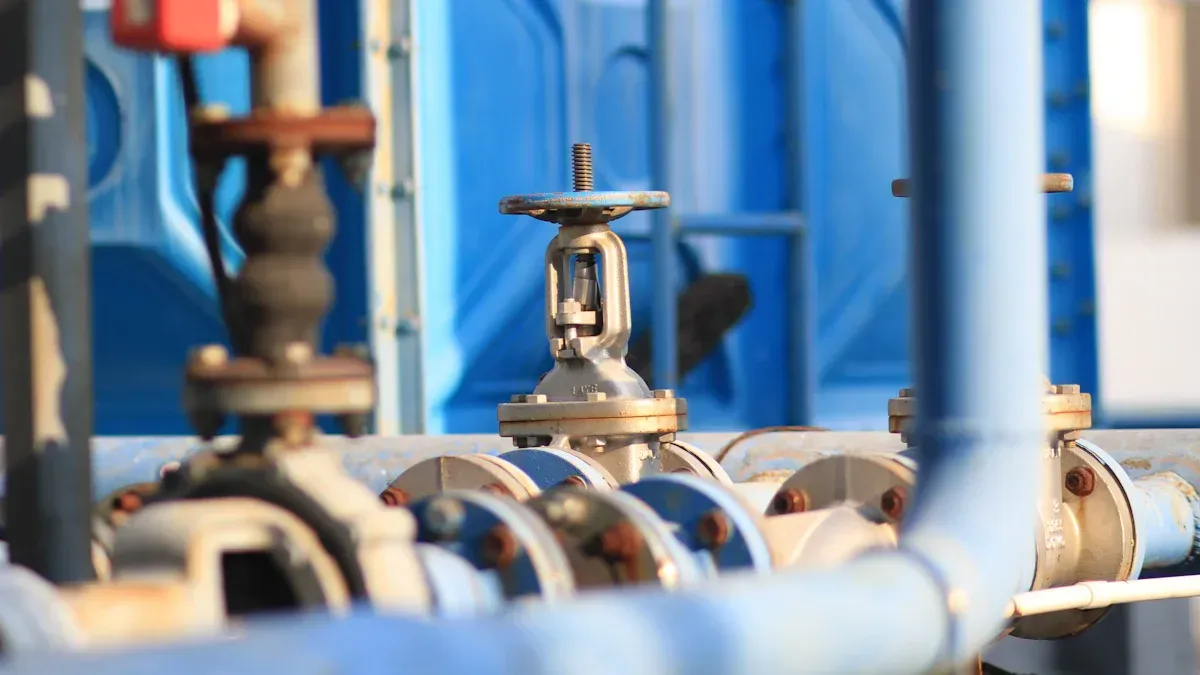
A 3 way ball valve helps you control fluid in many factories. This valve lets you mix, send, or stop flow fast. For example, you can move water to different tanks at a treatment plant. You can also mix chemicals in a factory. You get good control over flow. This helps keep quality high and lowers risks like leaks or spills.
|
Benefit |
Description |
|---|---|
|
Precise Control |
Helps keep quality high and lowers risks like leaks and emissions. |
|
Improved Responsiveness |
Using electric actuators lets you shut off flow fast in dangerous times. |
|
Remote Operation |
Fewer workers need to be near the valve, which is safer in hard-to-reach places. |
|
Predictable Energy Efficiency |
Uses less energy when the valve stays in one spot. |
You can use your hand or an actuator to move the three-way ball valve. Automated systems help you act fast in emergencies. You also save energy because the valve does not use much power when it does not move.
Process integration
A 3-way valve connects different steps in your process. This valve lets you mix fluids, send them to machines, or stop flow for repairs. You can link the valve to control systems like SCADA. This helps you watch and control the process right away.
-
3-way electric ball valves give you good control of fluid flow.
-
You save energy by making flow paths better and cutting waste.
-
You can connect the valve to control systems for real-time checks and automation.
You need to keep your ball valve in good shape. Regular care helps you stop problems. Here is a simple checklist:
-
Look for leaks in seals and check the packing every day.
-
Oil the valve stem and bearings once a month.
-
Tighten the gland if you see leaks and change packing if needed.
You want your 3-way ball valve to last a long time. How long it lasts depends on what it is made of:
|
Valve Material |
Lifespan Estimate (Years) |
|---|---|
|
Brass |
5 to 15 |
|
Stainless Steel |
15 to 25 |
|
PVC |
3 to 10 |
You may see some common ways your valve can fail:
|
Failure Mode |
Description |
|---|---|
|
Ball Wear |
The ball wears out fast, which can cause leaks and bad performance. |
|
Inconsistent Response |
The valve may not always work the same, which can mess up your process. |
|
Seal Degradation |
Seals can wear out if you use the valve a lot. |
|
Torque Buildup |
The valve can get hard to turn, which can make it break early. |
Tip: Always follow a maintenance plan to keep your 3 way ball valve working well. This helps you avoid problems and keeps your process safe.
You use a 3 way ball valve to control how raw materials move. This valve helps you shut off flow tightly in your system. You can mix, split, or send fluids different ways. Automated controls let you change flow fast. Lower pressure drops help you save money. The three-way ball valve is special because it works in many ways and is efficient. You use it for careful control, better safety, and to fit different machines.
|
Feature |
Benefit |
|---|---|
|
Precision Control |
Accurate fluid direction |
|
Efficiency |
Lower energy waste |
|
Safety |
Protects from overpressure |
|
Flexibility |
Fits many industrial systems |
FAQ
How do you know if a 3-way ball valve is open or closed?
You can check the handle position. When the handle lines up with the pipe, the valve is open. If the handle is across the pipe, the valve is closed. Always look at the handle before you change flow.
Can you use a 3-way ball valve for both liquids and gases?
Yes, you can use a 3-way ball valve for both. Make sure you pick the right material for your fluid. Stainless steel works well for many liquids and gases. Always check the valve’s rating before use.
What is the difference between a mixing and a diverting 3-way valve?
A mixing valve lets you combine two flows into one. A diverting valve sends one flow to two different places. You choose the type based on your process needs.
How often should you maintain a 3-way ball valve?
You should check your valve every month. Look for leaks, test the handle or actuator, and clean any buildup. Regular care helps your valve last longer and work better.