



Selecting the right industrial valves for your piping system is essential for maintaining fluid control efficiency, system safety, and long-term performance. When deciding between wafer and lug designs, understanding how each mechanism integrates into a pipeline will help you make an informed choice for your project.
A wafer type butterfly valve is designed to clamp tightly between two pipe flanges using long stud bolts that span the entire body. Because of its compact face-to-face dimensions and lightweight structure, a wafer type butterfly valve provides an economical, space-saving solution that significantly lowers initial equipment and installation costs.
Conversely, lug style butterfly valves feature threaded inserts around the outer body. They bolt directly to the pipe flanges on each side, allowing for safe dead-end service and enabling single-side pipeline maintenance without depressurizing the adjacent system.
When evaluating options from TANGGONG VALVE GROUP, it is important to balance initial capital expenditure with future operational flexibility. A wafer type butterfly valve saves money upfront and offers easy installation in straight pipe runs, while a lug style valve offers added versatility for downstream maintenance. Always analyze your system’s operating pressure, temperature, dynamic flow rates, and piping design before choosing the ideal valve setup.
Key Takeaways
-
Wafer butterfly valves are light and cheap.
-
They work well for basic pipe systems.
-
Lug butterfly valves have threaded inserts inside.
-
These let you fix one side safely.
-
You can work on just one pipe.
-
Think about your system maintenance needs.
-
Also, consider your pipe heat conditions.
-
These factors help you choose valves.
-
Both valve designs use standard sizes.
-
You can upgrade parts very easily.
-
You will not need new flanges.
Design Principles of Wafer Style Butterfly Valves
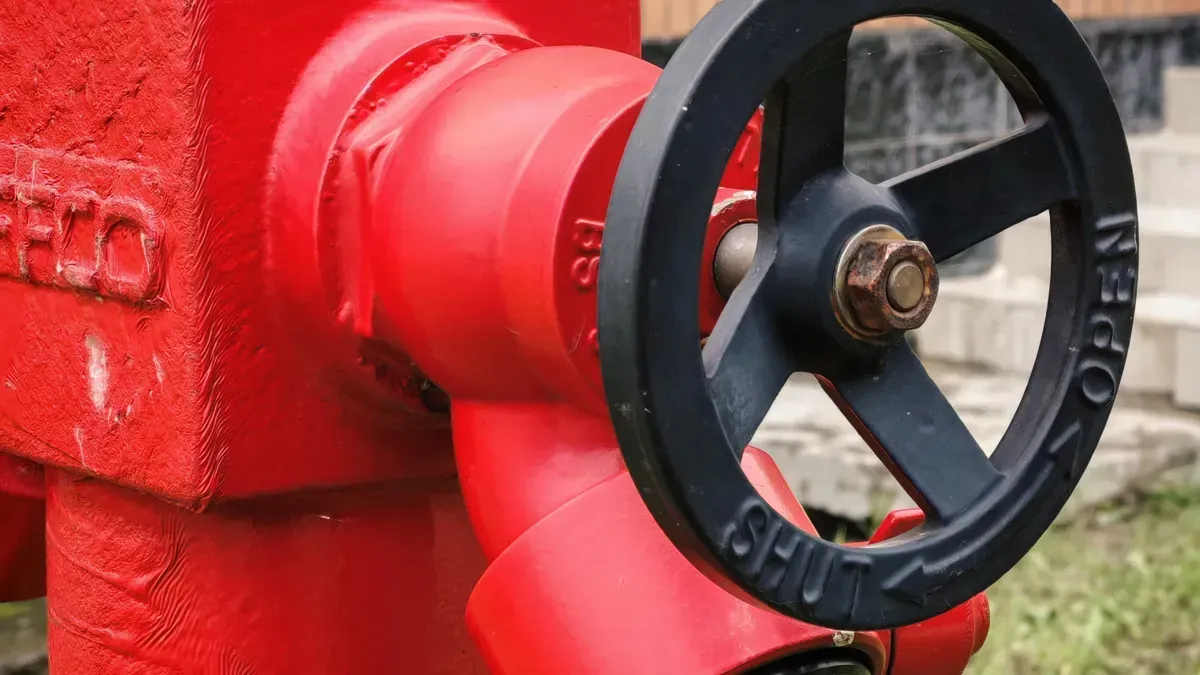
Engineers create wafer style butterfly valves for simple pipe setups. They fit smoothly between two pipe flanges. You can easily add them to your piping layout.
Flange Clamping Mechanics
Long bolts go through both pipe flanges completely. These bolts hold the central valve body tight. You tighten them in a balanced pattern. This creates a tight seal. Long bolts stretch more in hot systems. Extreme heat expands them quickly. This heat can lower flange clamping pressure.
1. First Step: Tighten all bolts to 30% torque.
2. Second Step: Raise torque to 60% capacity.
3. Third Step: Reach 100% of the target torque.
4. Final Check: Ensure every bolt feels evenly tight.
Core Advantages and Cost Efficiency
This design brings great benefits to your piping system. Its thin body makes handling very easy. It installs quickly in tight spaces. The lighter weight saves you shipping money. Lower valve mass reduces freight costs.
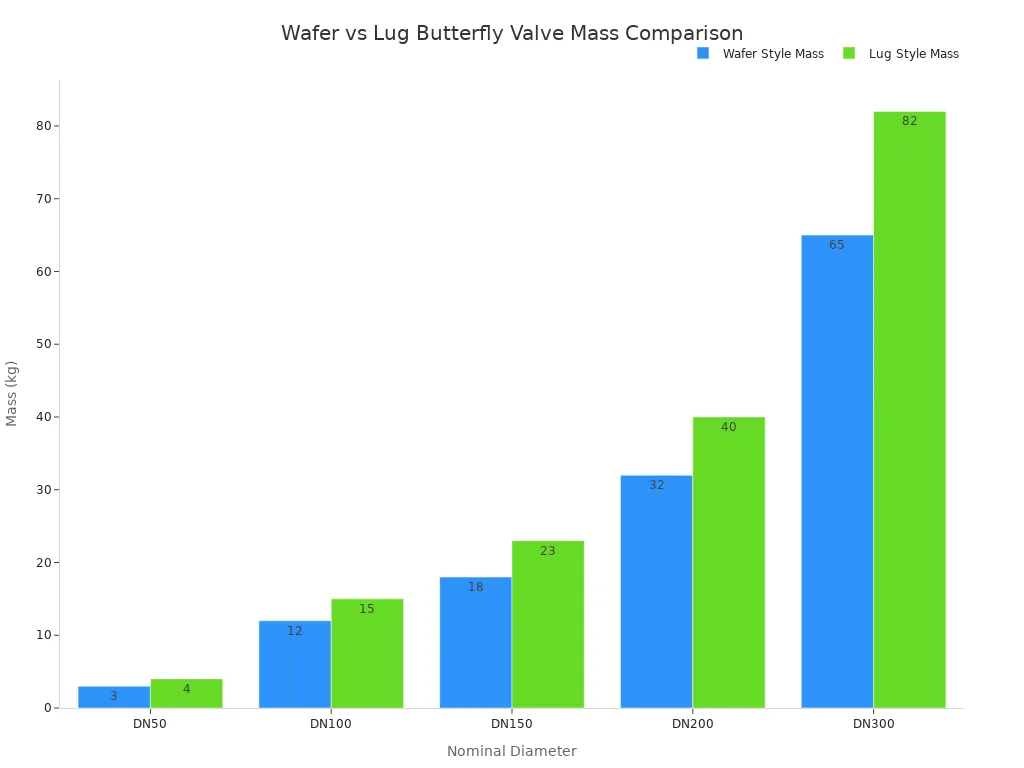
A wafer type butterfly valve works great in water systems. Smaller wafer style butterfly valves use less metal.
Operational Limitations and Line Shutdowns
You must learn important usage limits before buying one.
-
Shared Bolting Mechanism: Long bolts grip both sides at once.
-
Absence of Single-Side Isolation: A wafer butterfly valve cannot hold pressure alone.
-
System Maintenance Impact: You must stop and drain the pipeline first.
Typical uses include light water lines and HVAC systems. These facts help you pick the right wafer type butterfly valve spots.
Mechanical Performance of Lug Style Butterfly Valves
Engineers build lug style butterfly valves carefully. Threaded metal inserts run along the outer body. These threaded lugs match standard pipe flange patterns.
Threaded Lugs and Bolting Hardware
A lug-style butterfly valve uses two bolt sets. You fasten short bolts into the body. These short bolts install from each flange.
|
Valve Style |
Hardware Type Required |
Mounting Configuration |
|---|---|---|
|
Lug Style |
Short bolts / cap screws (2 sets) |
Fastened directly into the valve's threaded body lugs independently from both flange sides |
|
Wafer Style |
Long through-bolts (1 set) |
Passes completely through both flanges and the valve body |
Dead-End Service and Single-Side Disconnection
This strong design brings great flexibility to pipes. You can remove downstream pipes for repairs easily. Upstream fluid stays under full pressure safely.
-
Threaded Protrusions: Built-in threaded body lugs attach to flanges.
-
Independent Bolting: Separate bolt sets secure each side tightly.
-
Isolation Capability: Allows single-side disconnection during dead-end service safely.
These features offer major perks during system upgrades. You must think about heavy valve mass. Material expenses are also higher now. A lug butterfly valve needs stronger pipe supports.
Heavy-Duty Industrial Capability
Heavy industrial lines need strong valves for safety. High-pressure oil lines use these tough designs. Petrochemical plants rely on them every day. Marine processing systems also need them often. You can pick them for sanitary process lines. Demanding pharmaceutical systems use them too. Clean applications need smooth polished surfaces.
|
Valve Component |
Material Specification |
Purpose / Application |
|---|---|---|
|
Body / Base Material |
SS316, SS316L (or higher grades), Bronze, Brass |
Provides core resistance against harsh seawater and marine corrosion |
|
Exterior Coating |
Fusion Bonded Epoxy (FBE) or Epoxy Resin |
Protects the valve exterior from outer seawater degradation |
|
Seals & Gaskets |
EPDM or Viton |
Delivers tight sealing; Viton is specified for aggressive/high-temp seawater |
|
Liners |
PTFE or Rubber linings |
Offers wear resistance against the abrasive qualities of seawater |
Choosing correct body metals ensures a long life.
Technical Comparison: Lug Butterfly Valve vs Wafer Type Butterfly Valve
Comparing key traits helps pick the right valve. You must test space and weight limits first. Check hardware needs and repair choices before buying.
Installation Hardware and Space Footprint
Pipes need careful focus on size and weight. A wafer type butterfly valve stays very thin. Long through-bolts clamp it between two flanges. Workers install them fast due to light weight.
A lug butterfly valve uses short bolts instead. You thread them into lugs from both sides. This setup adds extra weight in large pipes. Heavy industrial pipes need extra supports for safety.
Both styles follow strict rules for exact sizing. Standard dimensional shapes match main global standards like API 609:
-
MSS SP-67
-
ISO 5752
-
ASME B16.10
These rules let teams swap valves without changing flanges.
Pressure Ratings and Dead-End Isolation
Pressure limits show big differences between both types. Wafer styles need equal pressure from both flanges. Removing pipes loses force, so wafer valves fail.
 -------------------------------------------------------------------------------
|                      PRESSURE HANDLING & ISOLATION SUMMARY                    |
 -------------------------- ------------------------- --------------------------
| Performance Metric       | Wafer-Style Design      | Lug-Style Design         |
 -------------------------- ------------------------- --------------------------
| Dead-End Isolation       | Not Permitted           | Fully Supported          |
| Pressure Capabilities    | Up to ASME Class 300    | Up to ASME Class 600     |
| Downstream Disconnection | Requires Complete Drain | Supports Isolated System |
 -------------------------- ------------------------- --------------------------
TANGGONG VALVE builds strong valves meeting API 609. The plant makes Class 150 to 600 valves. Choose soft EPDM seats or tough metal seats.
Total Cost and Maintenance Flexibility
Budgets cover initial price tag and repair costs. Wafer bodies use less metal, cutting total costs. A wafer type butterfly valve saves pipeline money.
Selection Tip: Choose wafer body models for tight budgets in continuous fluid lines, but select lug body designs whenever your system requires routine downstream equipment servicing.
Lug bodies cost more for extra metal machining. Yet, they give great long-term repair benefits. Close the valve to work on pumps safely. Upstream pipes stay pressurized, preventing complete plant stops.
TANGGONG VALVE Selection Guide: Choosing the Right Wafer Butterfly Valve or Lug Valve
Piping engineers must select valve models carefully. Analyze your pipeline layout, repair schedules, and fluid traits. TANGGONG VALVE supplies high-quality butterfly valves for diverse setups. These facts help you pick the right model.
Assessing Maintenance Protocols and Dead-End Service
Review your routine repair schedule before buying any valve. Teams may need to isolate parts during normal work. A lug valve lets you detach downstream pipes safely. The upstream side stays under full operational pressure.
Separate bolts on lug valves remove serious safety hazards. You shield technicians from sudden chemical hazards and blowouts.
|
Maintenance Risk Eliminated |
Mechanism / Safety Advantage |
|---|---|
|
Accidental pressure release |
Retains a secure seal on the upstream section to shield maintenance personnel |
|
Full system shutdown & depressurization |
Permits isolation of localized downstream segments while keeping the upstream line under pressure |
Lug valves give clear safety perks for hazardous media.
|
Hazard / Exposure Risk |
Safety Benefit of Lug Style Isolation |
|---|---|
|
Exposure to toxic or hazardous chemicals |
Enables section isolation without needing to drain vast amounts of dangerous fluids |
|
Messy slurry exposure and heavy liquid handling |
Facilitates fast downstream cleaning or pipe replacement without draining entire slurry lines |
A wafer butterfly valve lacks dead-end service traits. You must stop the whole system for pipe repairs. Choose a wafer butterfly valve for full turnarounds.
Evaluating System Pressure and Operating Media
System fluids and operating pressures change your valve choice. Temperature shifts expand metals differently across systems. Heat impacts long through-bolts more than short bolts.
|
Valve Type |
Reaction to Thermal Variations |
Reaction to Pressure Surges |
|---|---|---|
|
Wafer Valve |
Uses long, continuous all-thread bolts that undergo significant thermal stretch during temperature fluctuations, causing bolt tension shifts that increase body stress and threaten seal integrity. |
Limited in handling high axial loads due to bolt expansion limits, leading to higher body/fastener stress under pressure surges. |
|
Lug Valve |
Fastens via shorter bolts threaded directly into structural lugs, minimizing thermal expansion risks and keeping body tension stable. |
Transfers axial loads straight into the valve housing via threaded lugs, delivering a rigid structure that better absorbs pressure spikes. |
Check strict cleanliness rules for pure process lines. Sensitive applications need clean, specialized valve parts. Food, liquid medicine, or pure water need sanitary lines.
Sanitary Process Tip: Select stainless steel TANGGONG VALVE models with PTFE linings for clean processing. These configurations maintain high hygiene standards across demanding pharmaceutical and food production environments.
TANGGONG VALVE builds sanitary butterfly valves with smooth discs. These models stop dirt in liquid transfer pipes. Purity needs benefit from these specialized valve metals.
Balancing Installation Budget and Long-Term Value
Comparing initial costs against repair fees shows real value. Purchase prices represent only part of total system costs. Factor in planned downtime costs over many operational years.
|
Valve Type |
Impact of Scheduled Downtime Costs |
Maintenance & Operational Capabilities |
Selection Justification |
|---|---|---|---|
|
Wafer Butterfly Valve |
Low Impact / Cost-Effective: Preferred when full system outages are already scheduled, as additional downtime costs are not incurred. |
Requires full system depressurization and complete line shutdown for maintenance due to lack of dead-end service capability. |
Economical choice when whole-system outages are acceptable or pre-planned. |
|
Lug Butterfly Valve |
High Impact / Cost-Saving: Justifies higher upfront costs by preventing expensive, facility-wide operational downtime. |
Enables individual equipment isolation and dead-end service; downstream piping can be removed while upstream headers stay pressurized. |
Best for continuous operations where avoiding system-wide downtime pays off the higher valve cost. |
A wafer type butterfly valve cuts initial buying costs. Upfront savings fade over time from high labor. System downtime and regular maintenance add up quickly.
Select between both main types using your plant priorities. TANGGONG VALVE makes certified API 609 butterfly valves. Both styles guarantee safe, lasting system work daily.
Think about early costs and future repair needs carefully. A wafer type butterfly valve saves space and money. This works best in simple pipe lines. A lug butterfly valve allows dead-end system use. It also isolates one side of your pipeline.
|
Operational Feature |
Wafer Style |
Lug Style |
|---|---|---|
|
Primary Benefit |
Low initial cost and compact design |
Dead-end isolation and single-side maintenance |
|
System Service |
Requires full line shutdown |
Allows partial system operation |
Final Recommendation: Pick a wafer butterfly valve for standard utility pipes. Choose TANGGONG VALVE lug valves for important lines. These vital lines need regular repairs or dead-end isolation.
FAQ
Can you use a wafer style butterfly valve for dead-end service?
No, you cannot use them this way. Wafer style butterfly valves need both flanges to squeeze. Squeezing holds the seal tight. Removing a pipe ruins this tight squeeze. Pick a lug butterfly valve for safety instead.
How do you choose between lug and wafer butterfly valves?
Quick Tip: Check your repair plans and money limits first.
Choose cheap wafer models for simple water pipes. Choose lug butterfly valve models for easy pipe repairs. They let you fix things without total stops.
What hardware do you need to install a lug butterfly valve?
You need short bolts for this job. Use two separate sets of bolts. Screw them directly into the valve body lugs. Each side connects to its own pipe flange. This keeps both pipe ends very safe.
Do wafer type butterfly valves and lug valves match in size?
Yes, they do. Companies build both styles using API 609. You can swap valve body styles very fast. You do not need to move pipe flanges.