Custom Your Industry Valves

Control Valve Series

What Is a Control Valve?

A control valve is a power-operated final control element used to modulate process flow, pressure, temperature, or liquid level by varying the size of the flow passage in response to a controlling signal (typically 4–20 mA, 0–10 V, or digital fieldbus). Unlike isolation valves that are either fully open or fully closed, control valves provide continuous throttling control to maintain the desired process variable.

Control valves consist of an actuator (pneumatic diaphragm, pneumatic piston, or electric motor) and a valve body (globe, angle, or rotary). The actuator converts the control signal into stem position, which moves the valve plug or disc to change the flow area. TANGGONG control valves are engineered for precise modulation in refining, petrochemical, power generation, and process industries worldwide.

TANGGONG VALVE GROUP has manufactured industrial control valves since 1990 at our facility in Wenzhou, China — "China's Valve Capital." Our control valves are tested to ANSI/FCI 70-2 shutoff standards and comply with IEC 60534 sizing calculations. All valves are factory-calibrated before shipment.

Process Flow Diagram
Strict process create high durability valve accessories
Valve Drawing

Valve Drawing

Valve Molding

Valve Molding

Casting Process

Casting Process

Annealing Process

Annealing Process

Semi-finished blank

Semi-finished blank

Material Inspection

Material Inspection

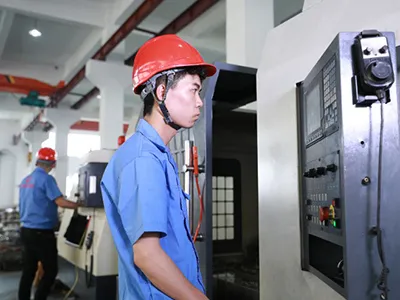
Production & Processing

Production & Processing

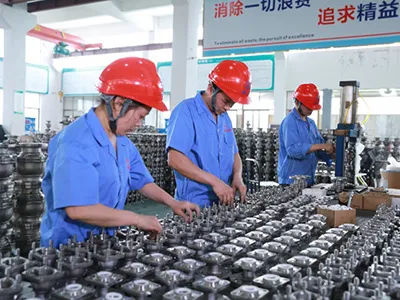
Valve Assembly

Valve Assembly

Testing & Pressure Testing

Testing & Pressure Testing

Valve Painting

Valve Painting

Packaging

Packaging

Product Transportation

Product Transportation

Quality Assurance Commitment
We Take Pride in Our High-Quality Work
International Quality Certification
Our valves are strictly designed and manufactured per GB, ANSI, API, JIS, BS, DIN and other global standards.
Support for multiple inspections
Every valve undergoes strict inspection and testing, with all inspection documents provided accordingly.
Reliable Technical Resources
To maintain all certifications and uphold the company’s high standards, all SIO employees receive professional training.

Control Valve Actuation Types: Pneumatic vs. Electric

🔵 Pneumatic Diaphragm Actuator

Compressed air (4–7 bar) acts on a flexible diaphragm to position the valve stem. Spring-return provides fail-safe (fail-open or fail-closed) action. Most common in process plants.

  • Signal: 4–20 mA + 4–7 bar air
  • Fail-safe: Spring-return (FO/FC)
  • Best for: Hazardous areas, fast response
  • Positioner: Smart digital or analog
  • Explosion-proof, SIL-capable

🟠 Electric Actuator

Electric motor drives the valve stem through a gear train. Accepts 4–20 mA, 0–10 V, or Modbus signal. No instrument air required — ideal for remote sites and automated plants.

  • Signal: 4–20 mA / Modbus / Profibus
  • Power: 24 VDC / 110 VAC / 220 VAC
  • Best for: Remote sites, precise positioning
  • Position feedback: Potentiometer / encoder
  • Compact, low maintenance

🟢 Cage-Guided Trim

Cylindrical cage with precision ports guides the plug and shapes flow characteristic. Provides low noise, anti-cavitation, and high capacity. The cage absorbs hydrodynamic forces.

  • Flow Characteristic: Linear / Equal %
  • Noise Reduction: Low-noise cage option
  • Anti-Cavitation: Multi-stage cage
  • Shutoff: Class IV / V / VI
  • High capacity, long trim life

🔷 Self-Operated Regulator

No external power or signal required. The process pressure itself acts on a diaphragm to position the valve plug. Simple, reliable, and maintenance-free for pressure reducing/back pressure service.

  • No external power required
  • Actuation: Process pressure sensing
  • Best for: Pressure reducing, back pressure
  • Simple, reliable, low cost
  • Setpoint: Adjustable spring load

Technical Specifications — TANGGONG Control Valve Range

Parameter Specification / Range
Nominal Size (DN) DN15 – DN600 (½" – 24")
Pressure Class Class 150 – Class 2500 (PN10 – PN420)
Temperature Range -196°C to +650°C (dependent on trim and seat material)
Body Materials WCB, WC6, WC9, CF8, CF8M, CF3, CF3M, LCB, LCC
Trim Materials SS304, SS316, SS316L, 17-4PH, Stellite 6, Tungsten Carbide
Actuator Types Pneumatic Diaphragm, Pneumatic Piston, Electric Motor, Hydraulic
Control Signal 4–20 mA, 0–10 V, HART, Modbus, Profibus PA/DP
Shutoff Class ANSI/FCI 70-2 Class IV, Class V, Class VI
Flow Characteristic Linear, Equal Percentage, Quick Opening
Design Standards IEC 60534, ANSI/FCI 70-2, GB/T 4213, API 6D (on/off variant)
Testing Standards API 598, ANSI/FCI 70-2, GB/T 4213
Certifications ISO 9001:2015, CE, SGS, 200+ national patents
Origin Wenzhou, Zhejiang, China (17.5万㎡ manufacturing base)

Industry Applications of Control Valves

TANGGONG control valves are deployed across major global industries for precise process control. Our engineering team can advise on optimal valve type, actuator selection, and positioning for each application.

🏭

Petrochemical & Refining

Cage-guided and low-noise control valves for crude oil fractionation, catalytic cracking, hydrocracking, and reforming units. Anti-cavitation trim for high pressure drop service.

Power Generation

Feedwater control valves, steam desuperheating valves, and turbine bypass control valves for thermal power plants. High-temperature (650°C) and high-pressure (Class 2500) designs.

⚗️

Chemical Processing

Corrosion-resistant control valves in SS316/SS316L/PTFE-lined bodies for aggressive acids, alkaline solutions, solvents, and polymer feedstocks. Metal-seated options for abrasive slurries.

🛢️

Oil & Gas Production

Anti-cavitation and low-noise control valves for wellhead choke, separator level control, gas lift, and export metering. SIL-capable designs for ESD integration.

🌊

Water & Wastewater

Flow control and chemical dosing valves for municipal water treatment, desalination RO plants, and wastewater treatment. 316SS or rubber-lined bodies for corrosion resistance.

🏗️

Pulp & Paper

High-capacity cage-guided control valves for stock preparation, bleach plant, and recovery boiler applications. Stellite-hardfaced trim for abrasive pulp service.

Why Choose TANGGONG Control Valves?

🏆

35+ Years Manufacturing

Founded 1990 in Wenzhou — China's largest valve production base. Over 300,000 valves produced annually, including 50,000+ control valves.

📋

Multi-Standard Certified

ANSI/FCI 70-2, IEC 60534, CE, SGS, ISO 9001:2015 certifications. SIL-capable designs available. Fire-safe per API 607.

🔬

In-House R&D

80 senior engineers, 687 technical staff, 200+ national patents. Dedicated Cv/Kv calculation and flow testing laboratory.

🌍

Global Export Experience

Exporting to 35+ countries. Experienced with HART, Modbus, Profibus, Foundation Fieldbus integration requirements.

🏗️

Full Manufacturing Control

175,000 m² production base. In-house machining, actuator assembly, positioning calibration, and flow testing for full quality control.

Free Sizing Service

Send us your process data sheet — our engineers provide free IEC 60534-compliant valve sizing and Cv/Kv calculation within 24 hours.

Frequently Asked Questions — Control Valves

What is the difference between a control valve and a shut-off valve?

A control valve is designed for continuous modulation — it throttles flow to maintain a desired process variable (flow rate, pressure, temperature, level). It operates under 4-20mA or digital signal control. A shut-off valve is designed for on/off service only — it is either fully open or fully closed, providing tight isolation with minimal pressure drop when open.

What is the difference between pneumatic and electric control valves?

Pneumatic control valves use compressed air (typically 4-7 bar) to drive a diaphragm or piston actuator. They are fail-safe (spring-return), explosion-proof, and fast-responding — ideal for hazardous areas (refineries, chemical plants). Electric control valves use an electric motor actuator with 4-20mA or Modbus control. They are easier to install (no air supply), offer precise positioning, and are suitable for remote/automated plants without instrument air systems.

What is cage-guided trim in control valves?

Cage-guided trim uses a cylindrical cage with precision-machined ports to guide the valve plug and shape the flow characteristic (linear, equal percentage, or modified). Cage-guided designs provide low noise, anti-cavitation, and high capacity. The cage also absorbs hydrodynamic forces, reducing vibration and extending trim life. TANGGONG cage-guided control valves are available in ANSI/FCI 70-2 Class IV, V, and VI shutoff ratings.

How to size a control valve for my application?

Control valve sizing requires: (1) process fluid properties (density, viscosity, vapor pressure), (2) expected flow rate range (min/max/normal), (3) upstream and downstream pressures, (4) temperature, and (5) allowable pressure drop. TANGGONG's engineering team provides free valve sizing calculations per IEC 60534 — send us your process data sheet and we will recommend the correct Cv/Kv and valve type.

What certifications do TANGGONG control valves have?

TANGGONG control valves are manufactured under ISO 9001:2015 quality management, tested to ANSI/FCI 70-2 shutoff standards (Class IV/V/VI), and certified to CE and SGS standards. Third-party inspection by TUV, SGS, or DNV is available for specific projects. SIL-capable designs per IEC 61508 are available on request.

In addition to control valves, TANGGONG VALVE GROUP manufactures a complete range of industrial valves for all pipeline requirements:

Get a Control Valve Quotation or Sizing Consultation

Send us your process data sheet (P&ID, flow rate, pressure, temperature, fluid properties) — our valve engineers will respond within 24 hours with IEC 60534-compliant sizing and a product recommendation.

✉️ Email: [email protected]📍 Longwan District, Wenzhou, Zhejiang, China🌐 www.tg-valves.com

+86 18157758329

[email protected]

+86 18157758329